Quick answer
The pipe that carries wastewater from your house to the public sewer main is called the sewer lateral, and in Santa Cruz County the property owner owns it and is responsible for keeping it working, including the part under the street. Common problems are roots, cracked or separated pipe, sags and older pipe materials that break down. A camera inspection shows what is wrong and where, and the repair can be one section, a full replacement or a trenchless method.
- You own your lateral, usually all the way to the connection at the public main.
- In the Santa Cruz County Sanitation District, a video inspection is required at sale, for many remodels and additions, and after repeated overflows.
- Warning signs: slow drains throughout the house, gurgling, backups in the lowest drains and sewage odors.
- Repairs to a lateral need a permit and an inspection before the trench is covered.
Who owns the sewer line?
In the Santa Cruz County Sanitation District, County Public Works tells property owners that they own and are responsible for the sewer lateral from where it connects to the public sewer main to the building. That includes cleaning it, repairing leaks and blockages, installing backflow devices where needed and paying for overflow cleanup and repairs.
In the City of Santa Cruz, the city says maintaining private laterals has always been the responsibility of each property owner, including the portion of the pipe under the city street and the connection to the main. The city also says the lateral should have an accessible cleanout, usually in or near the sidewalk, and that the owner is liable for spills caused by a failure of the building sewer.
Other cities and districts in the county have their own rules, so check with your sewer provider if you are not sure. On septic, there is no lateral to a public main: the pipe from the house runs to your septic tank, and it is entirely yours. Our pipe leak guide covers that line and the lines beyond the tank.
When a video inspection is required
County Public Works requires a sewer lateral video inspection in the Santa Cruz County Sanitation District in these cases:
- Escrow or sale of the property
- Additions or remodels that increase the fixture units over what was previously permitted, and ADU connections
- A new building
- More than two overflows within 12 months
The county's lateral program FAQ adds some details for sales:
- By default, the seller is responsible for the inspection and any required repairs, and they must be done before escrow closes.
- Only licensed California plumbing contractors may perform the inspection. The plumber records a video and an inspection report and submits them to the county.
- A cleanout is required before close of escrow if the lateral does not have one.
- Buyer and seller can instead use the county's transfer of responsibility form. With county approval, the buyer takes on the required repairs and devices, such as the cleanout, and must finish them within 90 calendar days of approval. The seller still provides the inspection video and the county reviewed inspection form.
- A lateral less than 20 years old that was inspected and approved when installed may be exempt, if the county accepts the proof.
The City of Santa Cruz has its own sewer lateral ordinance with time of sale requirements. Confirm current rules with your provider before listing a home.
What fails, and what the county looks for
The county evaluates a lateral on the number and severity of defects. Its FAQ lists examples that can require repair or replacement:
- Fractured, broken or severely deteriorated pipe
- Root intrusion
- Groundwater leaking into the pipe
- Out of round pipe and significant sags
- Materials prone to failure, such as Orangeburg, asbestos cement and cast iron
Those match what causes most sewer line trouble day to day. Roots find their way into joints and cracks. Hillside and coastal soils shift and settle. Older materials crack, corrode or deform. Grease builds up in low spots. Our hydro jetting guide covers how grease buildup is cleared and kept from coming back.
Warning signs
- Several drains slow at once, rather than just one fixture
- Gurgling in toilets or drains when water runs elsewhere
- Backups in the lowest drains, such as a shower or floor drain
- Sewage odors indoors or in the yard
- Wet spots, sunken soil or extra green grass along the line
- Clogs that keep coming back at the same point
Our post on slow drain solutions explains how to tell a local clog from a main line problem.
How sewer lines are inspected and repaired
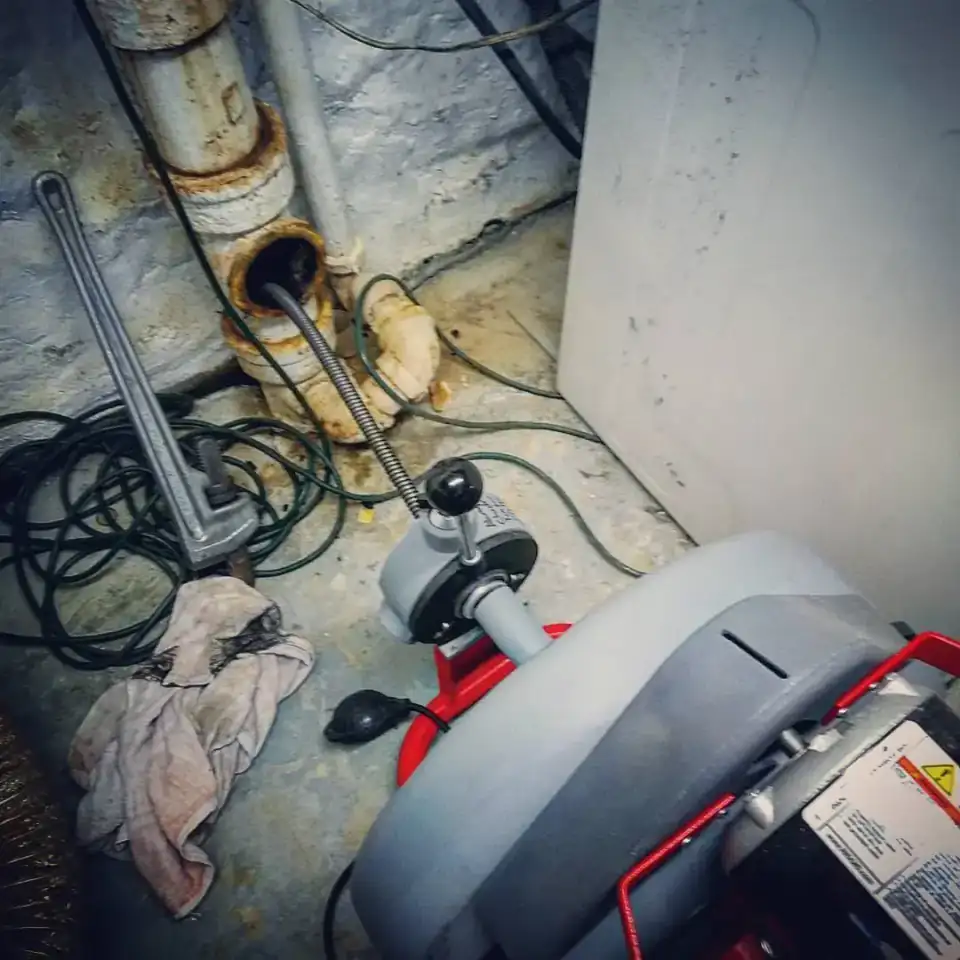
Inspection. A camera on a cable travels down the line through a cleanout and records cracks, roots, sags and separated joints, along with their distance from the access point. See sewer camera inspection and sewer line inspection. If there is no cleanout, a main line cleanout installation makes inspection and future maintenance much easier, and in the county district it is required before a sale closes unless the buyer takes on the work through an approved transfer of responsibility.
Repair options, based on what the camera shows:
- Cleaning with hydro jetting when the pipe is sound but full of grease, scale or root hair.
- Section repair of a single break, crushed spot or bad joint. See pipe repair and replacement.
- Trenchless replacement when much of the line is failing and digging a full trench would disrupt landscaping, driveways or hardscape. See trenchless sewer line replacement.
- Open trench replacement when the line is collapsed, badly sagged or the layout calls for it.
Permits. In the county district, lateral repair or replacement requires a sanitary sewer connection permit, and the work has to be inspected before it is covered up. The plumber handles the permit request and schedules the inspection.
Keeping a sewer line healthy
- Know where your cleanout is, and keep it accessible.
- Keep grease, wipes and food scraps out of the drains.
- Plant trees and large shrubs away from the sewer line.
- Have the line inspected if you notice the warning signs, before buying a home, or when planning a remodel that adds fixtures.
- Keep inspection videos and repair records with your house documents.
The wet season, roughly November through April in Santa Cruz County, is when saturated soil and groundwater put the most stress on cracked lines. Our rainy season septic and drain prep checklist covers what to check before storms.
Frequently asked questions
Who is responsible for the sewer line under the street in Santa Cruz County?
In the Santa Cruz County Sanitation District and the City of Santa Cruz, the property owner is responsible for the lateral up to and including the connection to the public main, even where it runs under the street.
Do I need a sewer lateral inspection to sell my house?
In the Santa Cruz County Sanitation District, yes. A licensed plumber records a video inspection, and any required repairs must be done before escrow closes unless the county approves a transfer of responsibility, which gives the buyer 90 days after approval to complete them. The City of Santa Cruz has its own time of sale ordinance.
Does a sewer line repair need a permit?
In the county district, yes. The plumber requests a sanitary sewer connection permit, and the work is inspected before the trench is backfilled.
Is trenchless repair always possible?
No. It depends on the pipe's condition, layout and access. A camera inspection shows whether trenchless replacement is a good fit.
Sources
- Santa Cruz County Public Works, Sewer Lateral Resources
- Santa Cruz County Sanitation District, Sewer Lateral FAQ
- Santa Cruz County Public Works, Sewer Lateral Transfer of Responsibility Form
- City of Santa Cruz, City Sanitary Sewer System
Need a sewer line inspected or repaired?
Wade's Plumbing & Septic inspects and repairs sewer lines across Santa Cruz County and nearby Santa Clara County communities. Quotes are free and pricing is flat rate, quoted on site before work begins. Request service or call during office hours, Monday to Friday, 9:00 AM to 5:00 PM.