Quick answer
A septic system works by letting treated water soak into the soil of the drainfield. When weeks of rain fill that soil with water, the drainfield can only accept so much more, so the whole system slows down. The best prep is simple: keep roof and yard water away from the drainfield, fix leaks and running toilets now, spread out laundry and other heavy water use, and know the warning signs that mean it is time to call for an evaluation.
- Point downspouts, sump pump discharge and yard drains away from the tank and drainfield.
- Repair running toilets and dripping fixtures before the first big storm.
- Spread laundry and dishwasher loads across the week, especially during long storms.
- Keep cars and equipment off the drainfield, because wet soil compacts easily.
- Do not have a tank pumped while the drainfield is flooded or saturated.
Why wet soil matters for your drainfield
Your septic tank separates solids from wastewater. The liquid then flows to the drainfield, where it spreads into the soil and is treated as it moves through. That last step depends on the soil having room for the water.
During a long wet stretch, rainwater and a rising water table take up that room. The U.S. EPA notes that excess water "slows down or stops the wastewater treatment process," and that whenever the water table is high there is a risk that sewage will back up into the home. The only way to relieve that pressure is to send less water into the system.
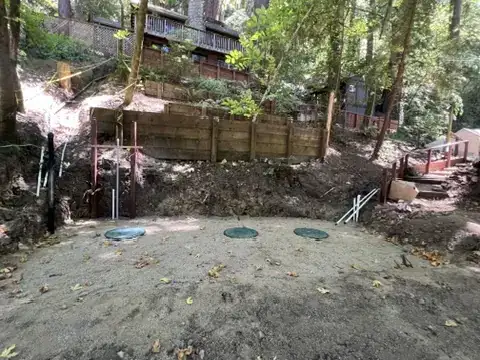
Many homes in the San Lorenzo Valley and the Santa Cruz Mountains, including Ben Lomond, Boulder Creek and Bonny Doon, sit on sloped, wooded lots where runoff collects quickly. Our guide to how Santa Cruz County geography affects septic systems covers why soil and slope matter so much here.
Before the storms: a walk around the yard
Pick a dry afternoon and walk the path from your house to the tank and drainfield.
- Downspouts and drains. Follow each downspout and any sump pump or French drain outlet. If it empties toward the tank or drainfield, redirect it. EPA guidance is to keep roof drains, sump pumps and other rainwater drainage away from the drainfield area.
- Low spots and channels. Look for places where runoff from a driveway or hillside will flow across the drainfield. A small swale or berm that sends water around the area can help. On steep or unstable ground, get advice before regrading.
- Lids, risers and cleanouts. Make sure tank lids and inspection ports are secure, intact and not buried. Cracked lids and missing caps let rainwater and silt in. If your lids are deep underground, septic tank risers make future checks much easier.
- Alarms and pumps. If your system has a pump chamber or an alarm panel, confirm the alarm light and buzzer work. EPA recommends that alternative systems with pumps, float switches or other mechanical parts be inspected more often, generally once a year. An alarm gives you early notice if a pump stops keeping up.
- Effluent filter. Many tanks have an outlet filter that keeps solids out of the drainfield. A clogged filter can cause slow drains that look like a drainfield problem. See septic filter cleaning and replacement.
Inside the house: habits that help during long rain
Everything that goes down a drain ends up in the septic system, so water use indoors is the part you control.
- Fix leaks first. EPA estimates a single leaky or running toilet can waste as much as 200 gallons of water per day. That is a lot of extra water for a drainfield that is already wet. Our toilet repair and leak detection services can help track down hidden water use.
- Spread out laundry. Doing all the laundry in one day can send more water than the tank and drainfield can handle at once. Run full loads and space them across the week.
- Go easy on the disposal. Food waste adds solids to the tank. Scrape plates into the trash or compost instead.
- Keep grease and wipes out. Grease, oils, coffee grounds and wipes do not break down well and can clog pipes and the drainfield. Only human waste and toilet paper belong in the toilet.
- Cut back during storm weeks. If drains are slowing during a long storm, shorter showers and postponed laundry give the system time to recover.
Should I have the tank pumped before the rainy season?
Pumping removes sludge and scum that build up in the tank over time, so it belongs on a regular schedule set by your septic professional. EPA says household tanks are typically pumped every three to five years. Pumping does not dry out a wet drainfield, though.
Timing matters. EPA specifically warns against pumping a tank while the drainfield is flooded or saturated: at best it is a temporary fix, and at worst the empty tank can try to float out of the ground and damage the inlet and outlet pipes. If your tank is due, schedule it while the ground is dry. Wade's does not offer septic tank pumping, but we can inspect the system and help you understand its condition. See our septic tank maintenance and care page for what that involves.
Warning signs that need a professional look
Call for an evaluation if you notice any of these, during or after a storm:
- Slow drains throughout the house, not just one fixture
- Gurgling sounds in pipes or toilets
- Sewage odors indoors or near the tank or drainfield
- Soggy ground, standing water or unusually bright green grass over the drainfield that lingers after the rain stops
- Wastewater backing up into a tub, shower or floor drain
- A septic alarm that sounds or stays lit
If sewage is backing up into the house, stop using water as much as you can. Our posts on signs your drain field needs professional repair and flood-proofing your septic system go deeper on what each symptom can mean. A septic inspection and assessment or troubleshooting visit can find the cause, whether it is a clogged filter, a failed pump, a damaged pipe or a drainfield that needs repair or replacement.
After a heavy storm or flood
If floodwater has covered your drainfield, EPA advises:
- Do not use the system until the water in the drainfield area is lower than the water level around the house.
- Do not drive or run equipment over the drainfield, because saturated soil compacts easily and loses its ability to treat wastewater.
- Have the system professionally inspected if you suspect damage, such as settling or drains that will not accept water.
- If you have a private well that may have flooded, do not drink the water until it has been tested. Contact Santa Cruz County Environmental Health for guidance.
Never open or enter a septic tank yourself. Tanks can contain dangerous gases, and only trained professionals should clean or repair them.
Frequently asked questions
Can heavy rain affect a septic drainfield?
Yes. A drainfield needs room in the soil to accept and treat wastewater. Long periods of rain and a high water table fill that space, which slows the system and can lead to slow drains or backups until the soil drains again.
Are soggy spots over a drainfield a warning sign?
Some surface moisture is normal right after a storm. Soggy ground, standing water or odors that linger after the surrounding yard has dried out can point to a drainfield problem and are worth having evaluated.
What should I check before a storm week?
Make sure downspouts and sump pump lines drain away from the tank and drainfield, tank lids and inspection ports are secure, any septic alarm works, and there are no running toilets or leaking fixtures adding water to the system.
Should I pump my septic tank before it rains?
Pump on the schedule your septic professional recommends, and do it while the ground is dry. EPA advises against pumping a tank while the drainfield is flooded or saturated, because the empty tank can shift and damage its pipes.
When does standing water need attention right away?
Sewage backing up into the house, a septic alarm that will not stop, or wastewater surfacing in the yard are reasons to cut water use right away and call a septic professional.
Sources
- U.S. EPA, How to Care for Your Septic System
- U.S. EPA, Septic Systems: What to Do after the Flood
- Santa Cruz County Environmental Health, OWTS Repair and Upgrades
Need a septic check before the rains?
Wade's Plumbing & Septic serves homes across Santa Cruz County and nearby Santa Clara County communities. Quotes are free and pricing is flat rate, quoted on site before work begins. Request service or call during office hours, Monday to Friday, 9:00 AM to 5:00 PM.