Quick answer
A septic system has two main jobs: hold wastewater long enough for solids to separate, then let the liquid soak into the soil, which finishes the treatment. In a typical system that means a building sewer pipe, a septic tank, often an effluent filter, a distribution box and a leach field. Many Santa Cruz County properties also have a pump chamber, an alarm or a supplemental treatment unit, because of slopes, shallow soil or high groundwater.
- Building sewer: carries all the wastewater from the house to the tank.
- Septic tank: separates solids (sludge) and grease (scum) from the liquid.
- Effluent filter: catches small solids before they leave the tank.
- Pump chamber and alarm: found on systems that pump effluent uphill or dose it on a schedule.
- Distribution box: splits flow between leach field lines.
- Leach field: lets the liquid soak into unsaturated soil, where it is treated.
How the parts work together
According to the U.S. EPA, all the water leaving a house runs out through one main drainage pipe into the septic tank. Solids settle to the bottom as sludge, and oils and grease float to the top as scum. Compartments and a T shaped outlet keep the sludge and scum in the tank. The liquid, called effluent, then flows to the drainfield, a shallow, covered excavation in unsaturated soil. EPA says the soil accepts, treats and disperses the wastewater as it percolates down, removing harmful bacteria, viruses and nutrients.
Every part downstream depends on the parts before it. A tank that lets solids escape clogs the filter or the field. A field that cannot accept water backs everything up into the house.
The parts, one by one
Building sewer
The pipe from the house to the tank, laid at a slope so wastewater flows by gravity. Problems here look like any main line clog: slow drains throughout the house and backups in the lowest fixtures. Roots, sags and cracked joints are the usual causes. A cleanout near the house makes it easier to clear and inspect. See our pipe leak guide for how this line is checked and repaired.
Septic tank
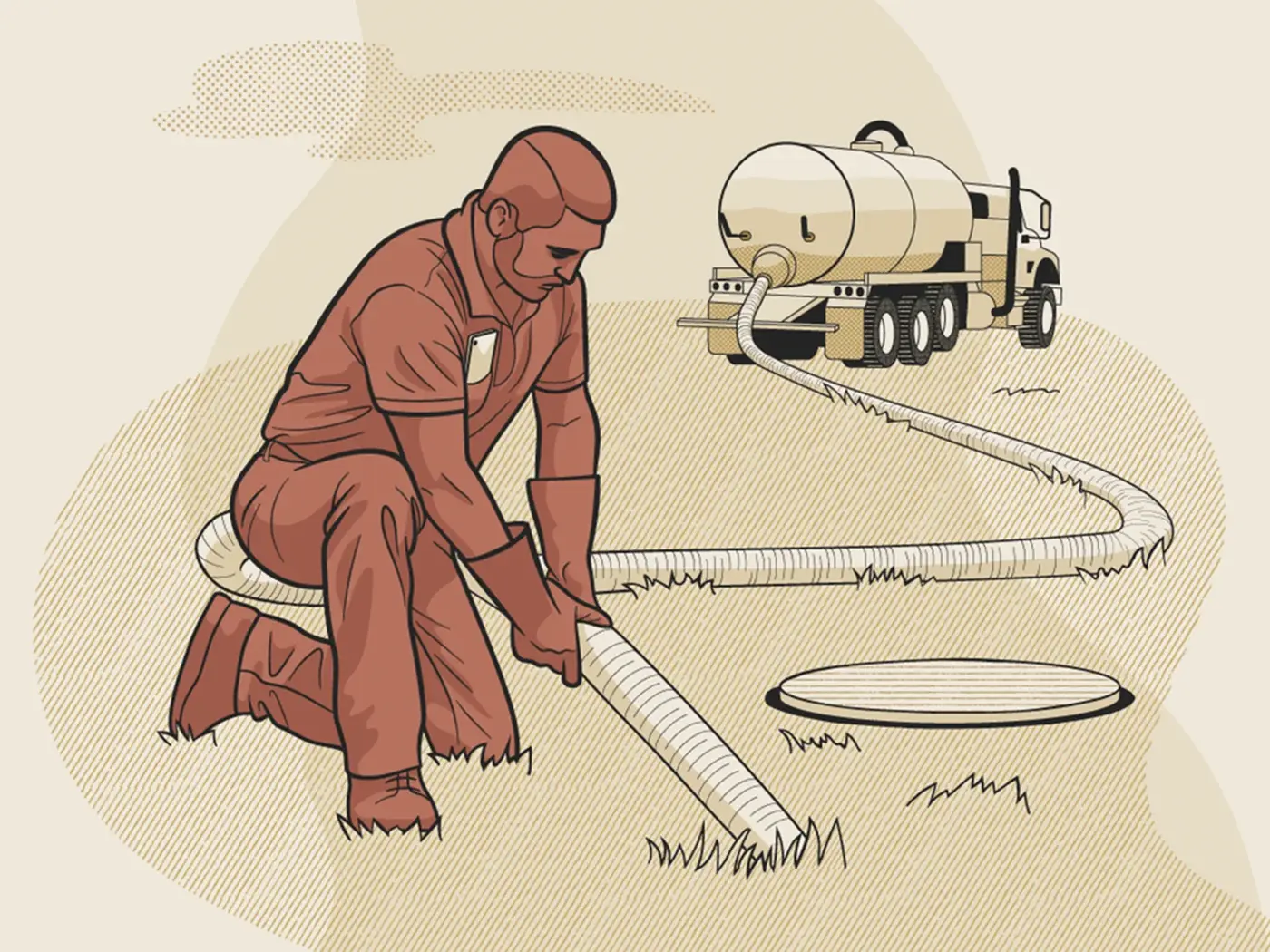
A buried, watertight tank, often concrete, with one or two compartments. Inlet and outlet baffles or tees slow the incoming flow and keep sludge and scum from leaving. The tank needs periodic pumping before sludge and scum build up far enough to escape. EPA recommends a professional inspection at least every three years for a typical household system.
What goes wrong: broken or missing baffles, cracks that let groundwater in or effluent out, and overdue pumping that sends solids toward the field. See septic tank repair and replacement and septic inspection and assessment.
Lids and risers
Tank lids are often buried, sometimes a foot or more down. A riser brings the access opening up to grade so the tank can be inspected and serviced without digging. It also makes it easy to find the tank later. See septic tank riser installation.
Effluent filter
A screened cartridge in the outlet tee that catches small solids before they reach the field. It protects the field but needs regular cleaning. A clogged filter can cause slow drains that look a lot like a failing field, which is one reason to check it first. See septic filter cleaning and replacement.
Pump chamber and alarm
When the leach field sits uphill from the tank, or the design calls for dosing effluent in measured amounts, a pump chamber follows the tank. EPA describes several system types that work this way: mound systems pump effluent to the mound in prescribed doses, sand filter systems pump effluent under low pressure, and drip systems use a dose tank for timed delivery. These systems need electrical power, and a high water alarm warns when the pump is not keeping up. If yours sounds, cut back on water use and have it checked. See septic tank alarm installation and troubleshooting and diagnostics.
Distribution box
A small box that splits effluent between the leach field lines so each one gets its share. If it settles, tilts or cracks, one line can flood while the others stay dry. See distribution box repair and replacement.
Leach field
Also called the drainfield or dispersal field. In a conventional system, EPA describes effluent piped from the tank to shallow trenches of stone or gravel. Chamber systems use connected plastic chambers instead of gravel. The soil does the final treatment, so it has to be unsaturated and able to accept water. Overloading, solids from the tank, compaction and roots are the common causes of failure. Our leach field repair guide covers the warning signs and fixes, and our post on signs your drain field needs repair goes deeper on symptoms.
Supplemental treatment
Some systems add a treatment step before the field, such as an aerobic treatment unit, which EPA says injects oxygen to increase bacterial activity, or a sand filter. These are common on lots where the soil alone cannot provide enough treatment, and they need ongoing maintenance. Our guides to septic system types and engineered septic systems explain when they are used.
Why Santa Cruz County systems vary
Steep slopes, shallow soil over rock, clay and high winter groundwater all affect what kind of system a property can use. That is why many local systems include pumps, alternative dispersal or supplemental treatment. Septic systems in the county are permitted through County Environmental Health, which sets the standards for repairs, upgrades and new systems. Our post on how county geography affects septic systems covers the local picture, and compliance and permitting explains the process.
Know your system
- Find your records. County Environmental Health keeps septic permit records by parcel. A permit or as built drawing shows the tank, field and any pumps.
- Mark the tank and field. Know where they are so no one parks, builds or plants trees on them.
- Learn what an alarm sounds like if you have a pump, and where the panel is.
- Keep service records, including pumping dates, filter cleanings and inspection reports.
- Watch for the warning signs: slow drains, gurgling, odors, soggy ground over the field and alarms. Our post on septic trouble signs explains each one.
For day to day care, see our septic maintenance guide.
Frequently asked questions
What are the main parts of a septic system?
The building sewer, the septic tank, usually an effluent filter, a distribution box and a leach field. Many Santa Cruz County systems also have a pump chamber with an alarm or a supplemental treatment unit.
Does every septic system have a pump?
No. Conventional systems often flow by gravity. Systems with a field uphill from the tank, mound and sand filter systems, and drip dispersal use pumps.
What does the effluent filter do?
It catches small solids in the tank outlet before they reach the leach field. It needs cleaning on a schedule, and a clogged filter can cause slow drains.
How do I find out what kind of system I have?
Check the septic permit records for your parcel through County Environmental Health, or have the system inspected.
Sources
- U.S. EPA, How Your Septic System Works
- U.S. EPA, Types of Septic Systems
- U.S. EPA, How to Care for Your Septic System
- Santa Cruz County Environmental Health, OWTS Repair and Upgrades
Need help with a septic component?
Wade's Plumbing & Septic inspects and repairs septic systems across Santa Cruz County and nearby Santa Clara County communities. Quotes are free and pricing is flat rate, quoted on site before work begins. Request service or call during office hours, Monday to Friday, 9:00 AM to 5:00 PM.