
Quick answer
The leach field (also called the drainfield) is where your septic system finishes treating wastewater, by letting it soak slowly into the soil. When it is overloaded, clogged or damaged, wastewater has nowhere to go: drains slow down, sewage can back up into the house, and soggy ground or odors show up over the field. Not every leach field problem means replacement. A clogged filter, a broken pipe, a failed distribution box or too much water going into the system can all look like a failing field. A proper diagnosis comes first.
- Warning signs: slow drains throughout the house, gurgling, sewage odors, soggy ground or bright green grass over the field, and backups.
- Common causes: too much water, solids carried out of the tank, roots, crushed pipes and compacted soil.
- Some problems are repairs to one part. Others need a new or larger dispersal area.
- In Santa Cruz County, Environmental Health decides whether repair or upgrade standards apply.
How a leach field works
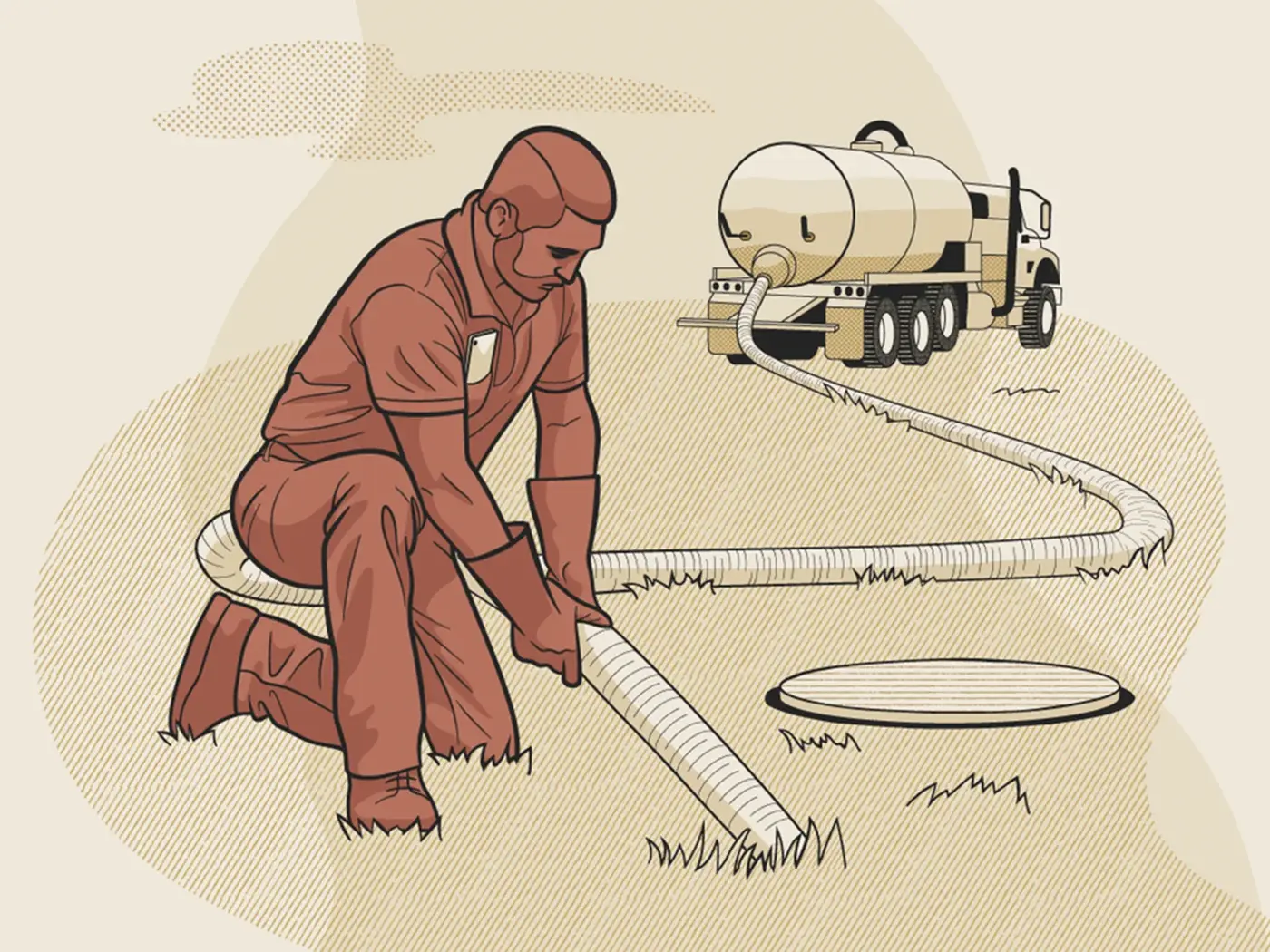
According to the U.S. EPA, a typical septic system has two main parts: a septic tank and a drainfield. All the wastewater from the house flows into the tank, where solids settle to the bottom as sludge and oils and grease float to the top as scum. A T-shaped outlet keeps those layers in the tank.
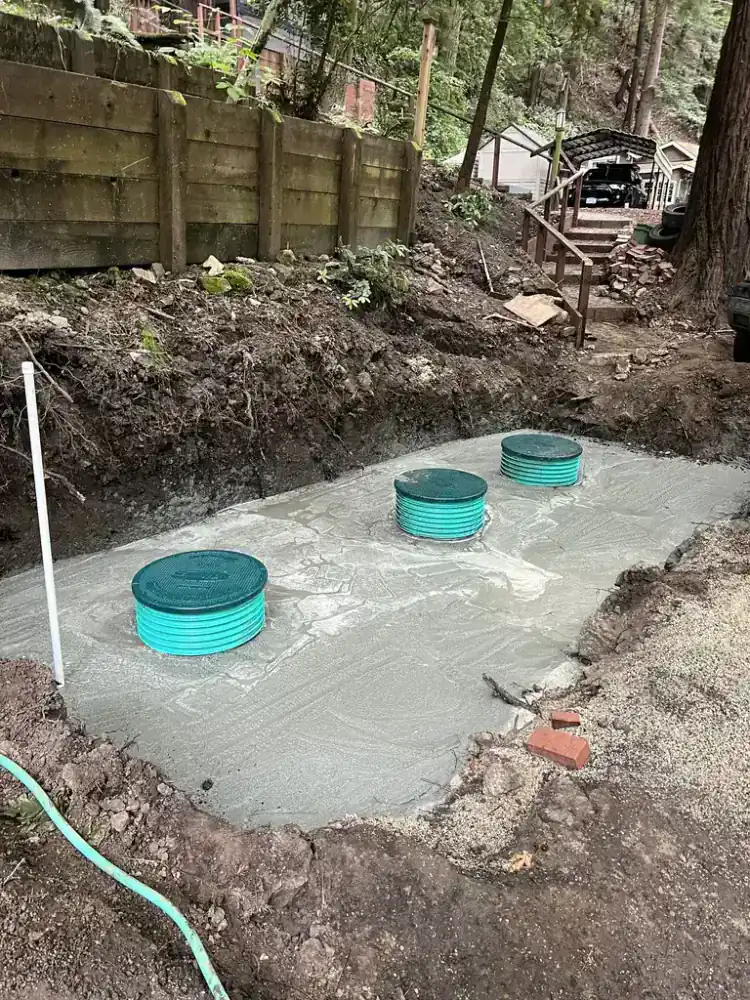
The liquid, called effluent, then flows to the drainfield. In a conventional system that is a set of perforated pipes or chambers in shallow trenches in unsaturated soil. The soil accepts, treats and disperses the wastewater as it percolates down, removing harmful bacteria, viruses and nutrients before the water reaches groundwater.
EPA notes that if the drainfield is overloaded with too much liquid, it can flood, sending sewage to the ground surface or causing backups in toilets and sinks. That is the failure most homeowners notice first.
Many Santa Cruz County properties, especially on steep or wooded lots in the mountains, use alternative systems with pumps, sand filters or other treatment units before the effluent reaches the dispersal area. The same idea applies: the soil has to be able to accept the water.
Warning signs of leach field trouble
- Slow drains everywhere. One slow sink is usually a local clog. Every fixture draining slowly points farther down the line.
- Gurgling in drains or toilets.
- Sewage odors inside, near the tank or over the field.
- Soggy ground, standing water or unusually lush grass over the field, especially when it lingers after the rest of the yard has dried.
- Backups into a tub, shower or floor drain, often when the washing machine drains.
- A septic alarm on a system with a pump chamber.
Our post on signs your drain field needs professional repair goes into more detail on each symptom.
Common causes and what fixes them
| Cause | What it looks like | Typical fix |
|---|---|---|
| Too much water going in | Slow drains during heavy laundry days or long storms | Fix leaks, spread out water use, redirect roof and yard drainage |
| Solids carried out of the tank | Clogged trenches, slow drains that keep returning | Tank service, an effluent filter, then field evaluation |
| Clogged effluent filter | Slow drains that look like a failing field | Filter cleaning or replacement |
| Failed distribution box | Some trenches flooded, others dry | Distribution box repair or replacement |
| Water softener brine going to the tank | Slow drains, clogging, surfacing effluent | Reroute the discharge to an approved separate system; the county ordinance bars softener discharge to septic |
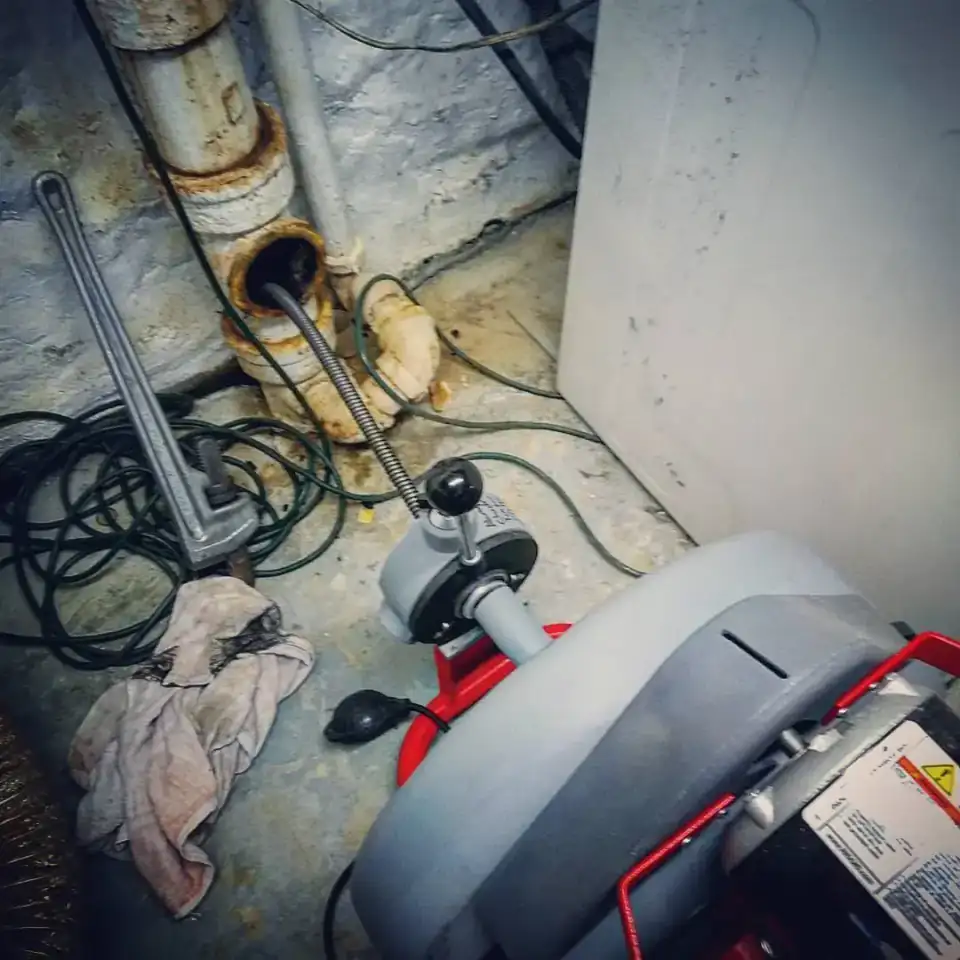
| Roots in pipes | Recurring slowdowns, often near trees | Root removal, pipe repair, line jetting |
| Crushed or broken pipe | Wet spot in one area, sudden change | Pipe section repair |
| Soil that no longer accepts water | Wet field even with normal water use | Leach field repair or replacement |
The point of a septic inspection or troubleshooting visit is to tell these apart before anyone starts digging.
Repair or upgrade: how Santa Cruz County looks at it
In Santa Cruz County, onsite wastewater treatment systems (OWTS) are permitted through County Environmental Health, and the rules depend on what is already permitted on your parcel.
- Repair means replacing an old or malfunctioning system that was permitted and correctly sized. According to Environmental Health, repair standards apply when the house does not exceed what the system was permitted for, with a one time allowance of less than 500 square feet if no bedrooms are added.
- Upgrade standards apply when the home now has more bedrooms, more than 500 additional square feet or more structures than the permit allowed, or when the work adds dispersal area or treatment components to meet current standards or serve an accessory dwelling unit.
- No permitted system on record means the parcel has to meet current standards for new development.
- Steep ground: a technical report is required when a system or future expansion area is proposed on slopes over 30 percent.
You can look up your parcel's septic permit history through Environmental Health's online records. If the existing field cannot be repaired in place, the replacement may need an engineered septic system. Our compliance and permitting service and guide to how county geography affects septic systems cover more of the local picture.
Protect the field you have
EPA's drainfield guidance comes down to a few habits:
- Do not park or drive on the field. Weight compacts the soil and can crush pipes.
- Plant carefully. Keep trees and large shrubs far enough away that roots stay out of the lines. A septic professional can tell you the right distance for your layout.
- Keep water away. Point roof drains, sump pumps and other drainage away from the field. EPA notes that excess water slows down or stops treatment.
- Use water efficiently. EPA says a single leaky or running toilet can add as much as 200 gallons a day, and doing all the laundry in one day can flood the drainfield. Spread loads across the week.
- Mind the drains. Only human waste and toilet paper belong in the toilet. Keep grease, wipes and chemicals out, and go easy on the garbage disposal.
- Inspect on schedule. EPA recommends an inspection at least every three years for a typical household system, and about once a year for systems with pumps or other mechanical parts.
The wet season is the hardest time for a leach field. Our rainy season septic prep checklist covers what to do before and during long storms.
Frequently asked questions
Can a failing leach field be repaired, or does it always need replacing?
It depends on the cause. A clogged filter, failed distribution box or broken pipe can often be fixed without replacing the field. Soil that has stopped accepting water usually needs new or additional dispersal area.
Why is the grass greener over my leach field?
Some extra growth is normal, but very lush grass, soggy ground or odors over the field can mean wastewater is reaching the surface. Have it checked.
Do I need a permit to repair a leach field in Santa Cruz County?
Septic repairs and upgrades go through County Environmental Health. Whether repair or upgrade standards apply depends on what your existing system was permitted for.
Will a lot of rain hurt my leach field?
Long periods of rain can saturate the soil so it accepts less water, which slows the whole system. Keeping drainage away from the field and cutting back on water use during storms helps.
Sources
- U.S. EPA, How Septic Systems Work
- U.S. EPA, How to Care for Your Septic System
- Santa Cruz County Environmental Health, The Harmful Effects of Water Softener Discharge on Your Septic System
- Santa Cruz County Environmental Health, OWTS Repair and Upgrades
Need a leach field evaluated?
Wade's Plumbing & Septic repairs and replaces leach fields across Santa Cruz County and nearby Santa Clara County communities. Quotes are free and pricing is flat rate, quoted on site before work begins. Request service or call during office hours, Monday to Friday, 9:00 AM to 5:00 PM.