When something goes wrong with your plumbing, the first question is usually whether you can fix it yourself. The answer depends on three things: how much you know, how serious the problem is, and whether the work needs a permit. This guide walks through each one, with the Santa Cruz County permit rules and the California contractor license rules that apply when you hire someone.
Start with what you know
If you have done a repair before and have the tools, simple jobs are often within reach. If you have never shut off a fixture valve or taken apart a trap, start small, and stop if something does not match what you expected. A plumbing mistake usually costs more than the original problem, because water finds its way into cabinets, floors and walls.
Before starting any repair, find the shutoff valve for the fixture and the main shutoff for the house, and make sure both work.
Jobs homeowners can usually handle
| Usually DIY friendly | Call a plumber |
|---|---|
| Plunging a sink, tub or toilet | Several drains slow or backing up at once |
| Cleaning a sink trap or aerator | Sewage coming up in a shower or floor drain |
| Replacing a toilet flapper or fill valve | A water heater that leaks or fails |
| Tightening a loose supply line connection | A burst, frozen or corroded pipe |
| Replacing a faucet washer or cartridge | Work inside walls, under slabs or on gas lines |
| Checking for leaks with a toilet dye test | Any job that needs a permit |
If you smell gas, this is not a plumbing appointment. Federal pipeline safety guidance and PG&E both say to leave the area on foot right away, staying upwind, and to call 911 once you are a safe distance away. PG&E asks customers to call PG&E after 911. Do not turn switches on or off or use anything that could ignite the gas, including a phone, until you are away from the building. Plumbing work on a gas water heater or gas line comes after the area has been made safe.
Our guides on a running toilet and slow drains cover the most common DIY fixes step by step. Sewage backing up is a different problem, covered in why dirty water backs up into a shower.
Check whether the work needs a permit
The County of Santa Cruz requires a plumbing permit for plumbing, gas or drainage piping work, and whenever a fixture or water heating or treatment equipment is installed, altered, repaired or replaced, unless the California Plumbing Code or a county ordinance exempts it. The county specifically says a permit is required to replace a water heater.
The county lists these as exempt:
- Stopping leaks in drain, soil, waste or vent pipe
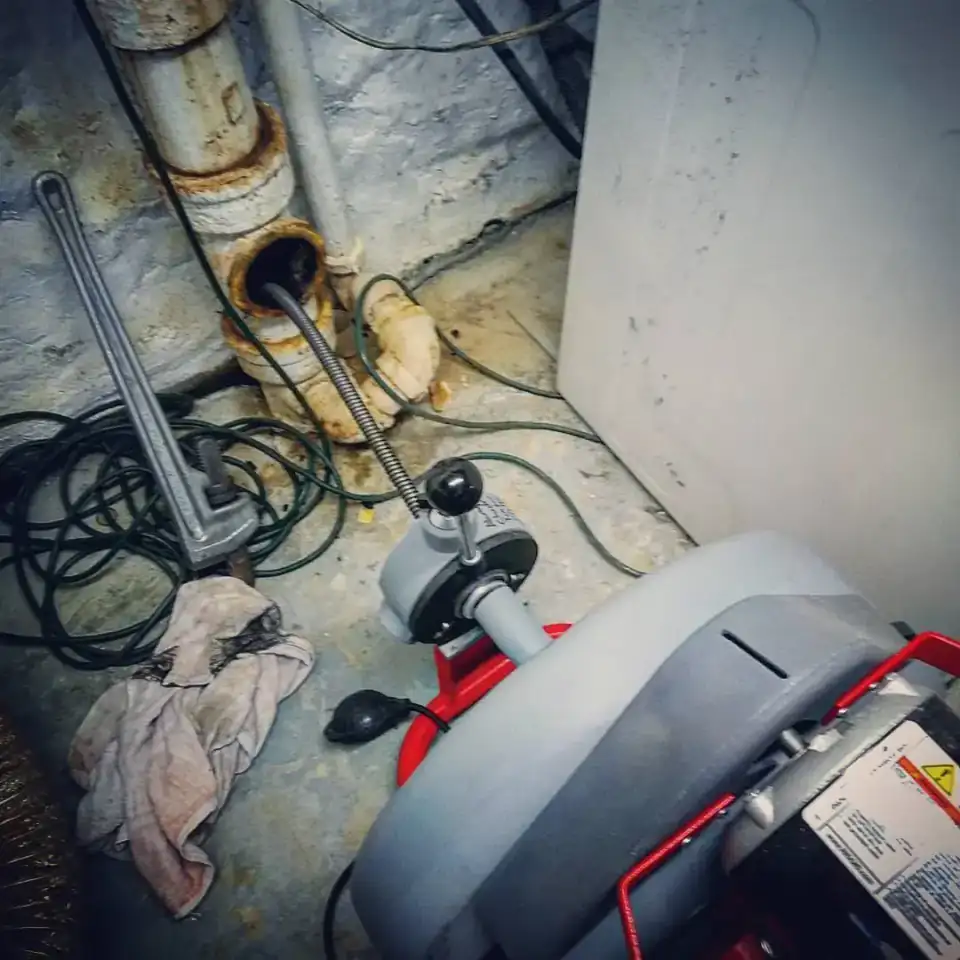
- Clearing stoppages
- Repairing leaks in pipes, valves or fixtures, as long as the repair does not replace or rearrange them
If you live inside a city such as Santa Cruz, Capitola, Scotts Valley or Watsonville, check with that city's building department, because each city issues its own permits. When you are not sure, ask before starting, since permits are much easier to get before the work than after.
Know the license rules when you hire
In California, the Contractors State License Board requires a contractor license for most jobs. The exemption for small handyperson jobs, raised by Assembly Bill 2622 in 2025, counts labor, materials and everything else together, and it applies only if no building permit is needed and the handyperson does not employ workers. That means a permitted job, such as a water heater replacement, needs a licensed contractor no matter how small the price.
You can look up any California contractor's license on the CSLB website before you hire them. Wade's Plumbing & Septic holds CSLB license #1087260.
Weigh time, tools and risk
DIY saves labor, but it is only cheaper if the repair holds. Before starting, ask yourself:
- Do I have the right tools, or will I need to buy them for one job?
- Can I shut off the water quickly if something goes wrong?
- What happens if the repair fails while I am away or asleep?
- Does the job need a permit or inspection?
If any answer gives you pause, a quote costs nothing and tells you what you are dealing with.
Frequently asked questions
Do I need a permit to replace a water heater in Santa Cruz County?
Yes. The County of Santa Cruz says a plumbing permit is required to replace a water heater. Cities in the county issue their own permits. Our guide to repairing or replacing a water heater covers the decision itself.
Can a handyperson do plumbing work in California?
Only on small jobs under the state's handyperson limit that need no building permit, and only if they do not employ workers. Anything larger, or anything that needs a permit, requires a licensed contractor.
Is clearing a clogged drain something I need a permit for?
No. The county lists clearing stoppages and stopping leaks in drain pipes as exempt from plumbing permits.
How is pricing quoted for plumbing repairs?
Flat rate pricing, quoted on site before work begins.
Sources
- County of Santa Cruz Community Development and Infrastructure, When is a Plumbing Permit Required?
- U.S. Pipeline and Hazardous Materials Safety Administration, Pipeline Leak Recognition and What to Do
- PG&E, Gas safety
- Contractors State License Board, Handyperson exemption increase under AB 2622
Need help with a plumbing repair?
Wade's Plumbing & Septic handles leaks, clogs, water heaters and pipe repair across Santa Cruz County and nearby Santa Clara County communities. Quotes are free and pricing is flat rate, quoted on site before work begins. Request service or call during office hours, Monday to Friday, 9:00 AM to 5:00 PM.