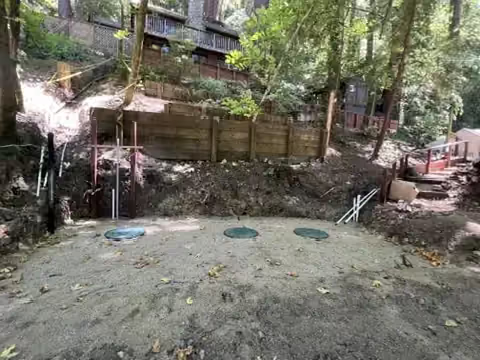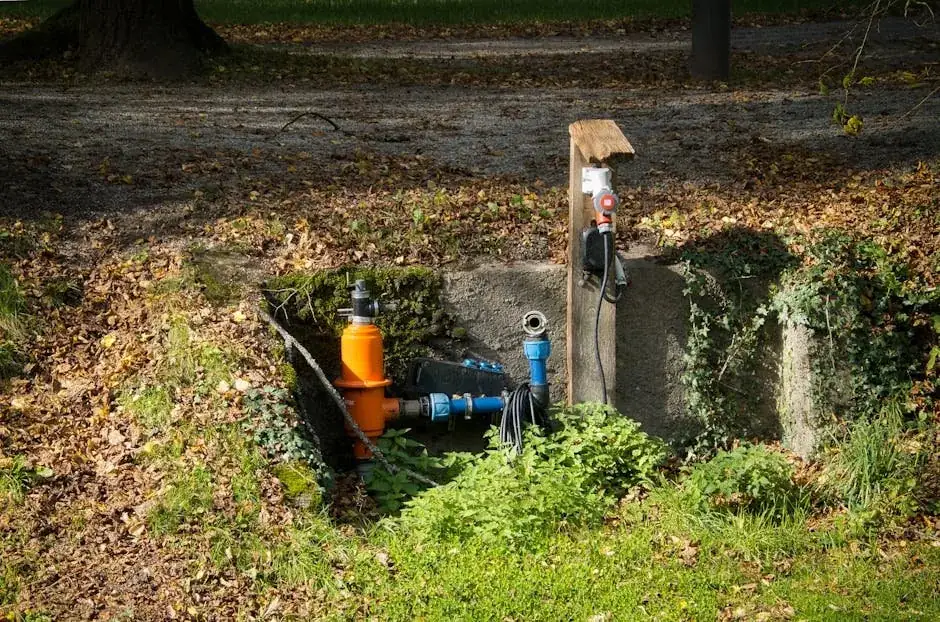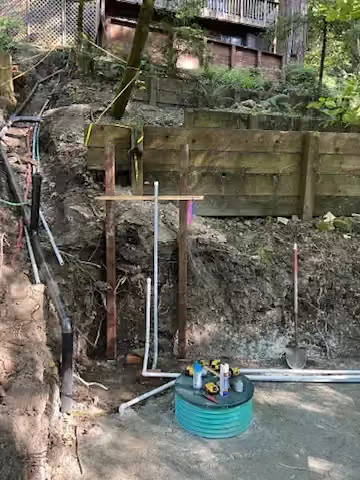
A perc test in Santa Cruz County is one part of a septic site evaluation run by a qualified professional you hire, with Environmental Health staff observing. The test measures how fast water soaks into the soil so the designer can size a leach field or show that enhanced treatment is required. Wade's Plumbing & Septic installs septic systems alongside that engineer after the design is permitted. Wade's does not perform perc tests and does not pump tanks. Quotes are free.
Quick answer
- Hire a county-qualified professional (California civil engineer, professional geologist, certified engineering geologist, or registered environmental health specialist). That person files the Site Evaluation application and fee with Environmental Health.
- The evaluation can include a records review, a joint site visit, soil profile pits, percolation tests, and wet-weather groundwater checks. Environmental Health tells you which steps still apply after the first two.
- A perc test is not a DIY check. County procedures call for six test holes, presoaking, and timed water-drop readings in minutes per inch.
- Results feed the sewage disposal permit. A conventional leach field is allowed only when the soils, slope, and groundwater meet Chapter 7.38. Many Felton, Ben Lomond, and Boulder Creek lots need an engineered system instead.
- After the permit is issued, a licensed installer (Class A, C-36, or C-42, or Class B only with new construction) builds the system. That is the work Wade's does.
Who runs the evaluation
Santa Cruz County Environmental Health's site evaluation page is clear: the qualified professional you hire conducts the evaluation with EH staff. The professional files the Site Evaluation application. At the visit they review surface features, site characteristics, and soil and groundwater conditions for the work proposed on the parcel.
County qualified professional rules split the jobs:
- Site evaluation, soil work, and perc tests: California licensed civil engineer, professional geologist, certified engineering geologist, registered environmental health specialist, or another professional EH approves.
- Slope stability reports: California licensed professional geologist or certified engineering geologist.
- System design: California registered civil engineer, professional geologist, or registered environmental health specialist (or another professional EH approves).
- Installation: a contractor licensed by the Contractors State License Board in Class A, Class B, C-36 Plumbing, or C-42 Sanitation System. A Class B holder may install a system only as part of a new construction project.
Wade's holds CSLB #1087260 in C-36 Plumbing and C-42 Sanitation System and installs engineered systems to the design the project's engineer prepares. Wade's does not replace the designer on the perc test.
What the county can require
Not every parcel needs every test. After the records review and site visit, EH tells the professional and the owner which remaining components are required. Existing data can be reused when it is still relevant.
Typical components, from the county's site evaluation page and LAMP Appendix F, are:
- Records review. The professional pulls prior permits and soils data. Start with EH Files if the parcel already has a septic permit.
- Site visit with the professional and EH staff.
- Soil profile study. Appendix F requires one or more backhoe or excavator pits, in addition to perc tests, unless EH waives the pits. Pits must reach at least 10 feet below the proposed trench bottom. On tight sites, EH can allow another method when a backhoe cannot reach the area.
- Percolation tests, observed by EH.
- Groundwater and seasonal water table work, including wet-weather observations when EH requires them. Our post on how Santa Cruz County terrain affects septic systems covers winter testing, slope limits, and nitrate concern areas.
- Slope report. If the dispersal area or expansion area is proposed on slopes over 30 percent, a technical report is required.
How a perc test is done
County Appendix F sets the method. Homeowners do not run it. The points that matter for planning the visit are:
- At least six holes per site, spaced 10 to 50 feet apart, in ground that already meets dispersal rules (slope, setbacks, and similar).
- Four holes at the proposed dispersal depth. Two holes about 3 feet below that depth. The deeper pair is used to see whether the soils under the field are usable. Those two rates are not averaged into the application rate used to size the field.
- Holes are 4 to 6 inches wide and at least 12 inches deep, with smeared soil scraped off, loose soil removed, and 2 inches of pea gravel in the bottom. They are presoaked (refilled four times, or soaked for four hours) before timed readings.
- The tester fills the hole to 6 inches over the gravel and records the drop until the rate stabilizes, reported in minutes per inch (MPI).
EH may watch hole installation, check presoaking, and be present for part or all of the test.
What the numbers decide
A passing perc rate is not a building permit. It is an input to the design. Chapter 7.38 and the LAMP then apply groundwater separation, clay limits, stream setbacks, and nitrate rules. Soils that perc too slowly or too fast, or that sit in a nitrate concern area with rapid perc, often need enhanced treatment. The new septic installation path is the next document to read once the site evaluation is done.
If you are adding a bedroom or an ADU, the evaluation has to cover the total flow, not only the existing house. See adding an ADU on a Santa Cruz County septic.
Frequently asked questions
Do I need a perc test to replace a septic system in Santa Cruz County?
Often yes, unless Environmental Health already has soil and perc data it will accept. After the records review and site visit, EH tells the qualified professional which tests are still required.
Can a plumber or installer run my perc test?
No. County rules reserve site evaluation, soil investigation, and percolation testing for a licensed civil engineer, professional geologist, certified engineering geologist, registered environmental health specialist, or another professional EH approves. The installer builds the permitted design. Wade's is the installer, not the perc tester.
What if the perc test shows the soil will not take a conventional leach field?
The designer looks at enhanced treatment and alternative dispersal that the county allows for that constraint. That is common on steep or tight lots in the San Lorenzo Valley. Wade's installs those systems alongside the engineer. Wade's does not pump tanks.
How is septic installation priced after the site evaluation?
Flat rate, quoted on site before work begins. Quotes are free. The perc test and design are billed by the qualified professional you hire, not as a Wade's price.
Sources
- Santa Cruz County Environmental Health, Site Evaluation
- Santa Cruz County Environmental Health, Qualified Professionals
- Santa Cruz County Environmental Health, EH Files
- Santa Cruz County Local Agency Management Program, Appendix F: Site Evaluation and Testing Procedures (PDF)
- Santa Cruz County Code, Chapter 7.38 Sewage Disposal