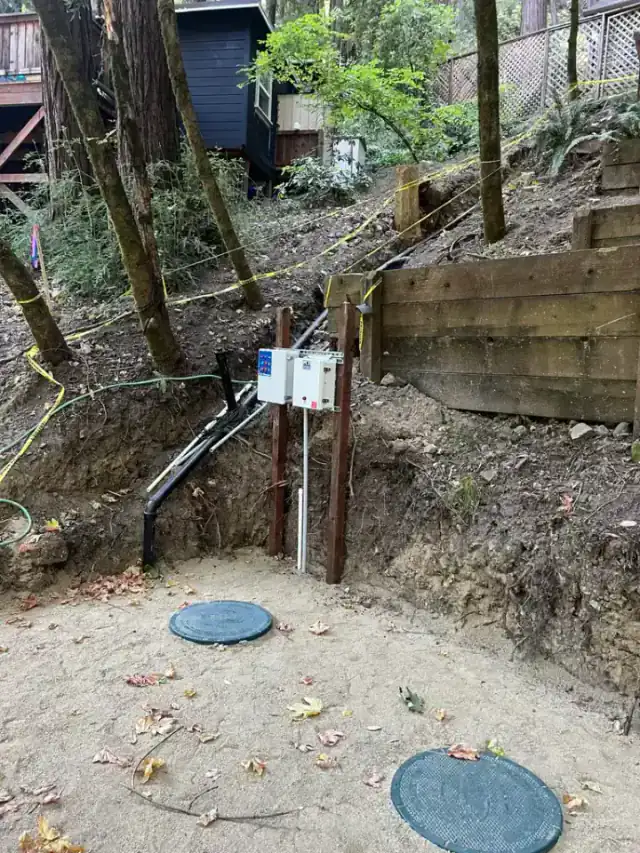

A new septic system in Santa Cruz County follows a set path: a qualified professional evaluates the site, a design is drawn to county standards, Environmental Health issues a sewage disposal permit, a licensed contractor installs the system, and the county inspects the work. Which rules apply depends on whether the parcel is raw land, has a permitted system that is being replaced, or is adding space or a unit. This post walks through each step.
Raw land: check the septic first
Santa Cruz County Environmental Health tells buyers that the primary question for an undeveloped parcel is how the wastewater will be handled. In many cases the only option is an enhanced treatment system. The county lists the usual challenges on raw land:
- Parcel size. The minimum parcel size for developing raw land is 1 acre, so some existing parcels cannot be built on. New parcels in drinking water supply watersheds need at least 10 acres.
- Steep slopes and cuts. Effluent can seep out of a slope or cut and can even cause a slope failure. A 1 acre parcel may have little flat space for a system, and a system cannot be placed on graded ground.
- Soil type. Clay soils need a larger leach field. Sandy soils need enhanced treatment.
- High groundwater. The leach field must sit far enough above groundwater for the soil to treat the effluent. If groundwater is too high, enhanced treatment is required.
Our post on how Santa Cruz County terrain affects septic systems covers the slope, groundwater and soil rules in more detail.
Replacing or adding to an existing system
For a home that already has a septic system, the first step is checking whether that system was permitted and what it was permitted for. The county's online Environmental Health files show the permitted number of structures, bedrooms and square footage. A parcel without a permitted system has to meet the standards for new development.
- Repair standards apply when the current structures do not exceed what the system was permitted for. The county allows a one time addition of less than 500 square feet per parcel if no bedrooms are added.
- Upgrade standards apply when the home now has more bedrooms, more than 500 additional square feet, or more structures than the permit allowed. Adding a system or tank for an accessory dwelling unit is also an upgrade.
The county counts any room other than a kitchen, bathroom and one living space as a bedroom.
Who does what
The county sets out who may do each part of the work:
- Site evaluation and design. Soil studies, percolation tests and system designs are prepared by a California registered civil engineer, professional geologist, registered environmental health specialist or another professional the county approves.
- Slope reports. Reports for steep slopes or other slope stability concerns come from a California licensed professional geologist or certified engineering geologist.
- Installation. The installer must hold a California contractor license in Class A, Class B, C-36 or C-42. A Class B holder may install a system only as part of a new construction project.
- Maintenance of enhanced systems. Onsite system service providers approved by the county and certified by the system manufacturer maintain enhanced treatment and alternative dispersal systems.
Wade's Plumbing & Septic holds California contractor license CSLB #1087260 in the C-36 Plumbing and C-42 Sanitation System classes and installs systems to the design prepared by the project's engineer or other qualified professional.
The permit and inspections
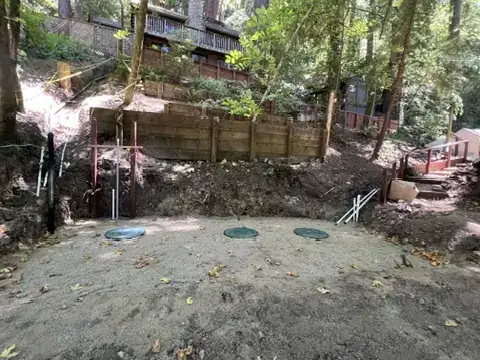
The county requires a sewage disposal permit for anyone who installs, upgrades, enlarges, replaces, repairs or destroys a septic system, whether the work is done by an owner, contractor or public agency. For new development, a qualified professional applies. The application is accepted only when complete, including the system design with a scaled plot plan and test results, applicable fees, and any grading plan, easement letter, slope stability report or geotechnical report the county asks for.
During construction, a copy of the approved design must stay on the job site until Environmental Health approves the system. The county inspects each new installation at least once, and the installer must request an inspection at least one business day before work begins. If an inspector finds an improper installation, the county can post a stop work order until the problem is cleared.
A sewage disposal permit for a structure stays valid as long as the building permit does. If it expires, a new application is required and the work must meet the rules in effect at that time.
After installation
A new system needs regular checks from the start. Systems with enhanced treatment come with ongoing obligations such as a maintenance contract and periodic inspections, described in our guide to septic system types. For conventional systems, our septic system maintenance guide covers inspection and emptying intervals. When a site needs an engineered design, our engineered septic system guide covers planning steps.
FAQ
Do I need a permit to replace a septic system in Santa Cruz County?
Yes. The county requires a sewage disposal permit to install, replace, repair, upgrade or destroy a septic system.
Does adding a bedroom or ADU affect my septic system?
It can. Adding bedrooms, more than 500 square feet, another structure or an accessory dwelling unit beyond what the system was permitted for brings in the county's upgrade standards.
Who can install a septic system in Santa Cruz County?
A contractor licensed by the California Contractors State License Board in Class A, Class B, C-36 or C-42. A Class B holder may install one only as part of new construction.
How is septic installation priced?
Flat rate pricing, quoted on site before work begins.
Sources
- Santa Cruz County Environmental Health, OWTS New Development
- Santa Cruz County Environmental Health, OWTS Repair and Upgrades
- Santa Cruz County Environmental Health, Qualified Professionals
- Santa Cruz County Local Agency Management Program, Appendix A: Sewage Disposal Ordinance
Planning a new septic system?
Wade's Plumbing & Septic provides engineered septic installation, septic compliance and permitting help and septic replacement across Santa Cruz County and nearby Santa Clara County communities. Quotes are free and pricing is flat rate, quoted on site before work begins. Request service or call during office hours, Monday to Friday, 9:00 AM to 5:00 PM.