Wade's Plumbing & Septic serves Santa Cruz County and nearby Santa Clara County communities with plumbing, water heater, leak, and septic installation work (with engineers). Wade's does not pump tanks. A New Year plumbing reset is a weekend checklist homeowners can finish themselves: shutoffs, washer hoses, water heater checks, a leak test, and a septic inspection plan. Quotes are free.
Quick answer
A New Year plumbing reset is a short list you can finish in one weekend morning. Find and test your shutoff valves, look over the washing machine hoses, check the water heater, run a simple leak test, and put your septic inspection on the calendar. None of it needs special tools, and each step is something homeowners can safely do themselves.
- Find the main water shutoff and make sure you can reach it and turn it.
- Turn each fixture shutoff under sinks and behind toilets.
- Check washer hoses for bulges, cracks or leaks, and note how old they are.
- Look over the water heater and check its temperature setting.
- Use the water meter and a few drops of food coloring to check for leaks.
- Find your last septic inspection record and plan the next one.
After the holidays, a full house and heavy kitchen use are behind you, and in Santa Cruz County the rainy season is still underway. January is a calm time to catch small problems before more storms arrive. For the reasons routine checks pay off, see our post on the importance of regular plumbing maintenance.
1. Find and test your shutoff valves
When a pipe or supply line bursts, the main shutoff is what stops the water. Everyone in the house should know where it is.
The San Francisco Public Utilities Commission's homeowner guidance describes where to look. Most main shutoffs are outside the house or just inside the property line, in line with the water meter. In some homes the water supply is a tank in the garage, basement or a closet, and the shutoff is on that tank. The valve is usually a round handle gate valve, which closes by turning clockwise until it stops, or a ball valve with a lever handle that is off when it sits at a right angle to the pipe.
For your reset:
- Find the main shutoff and clear anything stored in front of it.
- Make sure it turns. Close it partway and open it again. If it is stuck or leaks at the stem, do not force it. A valve that breaks while you are testing it can leave you with no way to stop the water.
- Check the fixture shutoffs under each sink, behind each toilet and at the washing machine. These let you stop water to one fixture without shutting off the house.
- Label them if the house has more than one valve or a separate valve for irrigation.
A main or fixture valve that will not turn or drips at the stem is worth replacing before you need it. Our pipe repair and replacement service covers valves.
2. Check the washing machine hoses
A washer supply hose is under water pressure all the time, even when the machine is off. When one fails, water keeps flowing until someone shuts it off.
Oatey, a plumbing products maker, says there is no universal rule, but most experts recommend replacing washing machine hoses every three to five years, and sooner if you see wear. Its signs that a hose needs replacing:
- Bulges or bubbles in rubber hoses
- Frayed wires or exposed inner tubing on braided hoses
- Rust or corrosion at the connectors
- Kinks or sharp bends behind the machine
- Any leak at the connections or along the hose
If you do not know how old the hoses are, write today's date on a piece of tape on each new hose when you replace them. Leave a little space behind the machine so the hoses are not crushed against the wall.
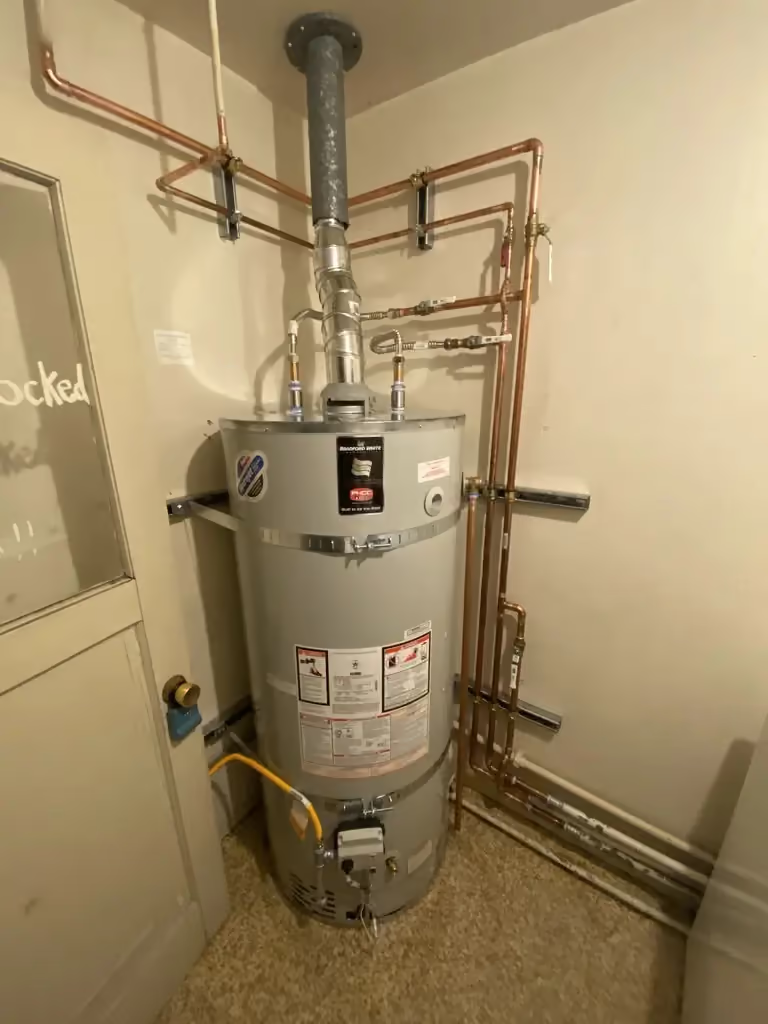
3. Water heater checks that are safe for homeowners
The U.S. Department of Energy's Energy Saver guide gives a few water heater tips that also make a good annual check:
- Temperature. DOE suggests setting a water heater to 120°F, a temperature it describes as safe for most people.
- Sediment. For tank water heaters, DOE suggests draining a quart of water from the tank every three months to remove sediment that reduces efficiency, following the manufacturer's directions.
- Insulation. Insulating hot water pipes can reduce heat loss.
Beyond that, a look around the heater tells you a lot:
- Look for water, rust or corrosion around the base and at the pipe connections.
- Keep the area around the heater clear, especially around a gas unit.
- Make sure the discharge pipe from the temperature and pressure relief valve is in place and not blocked.
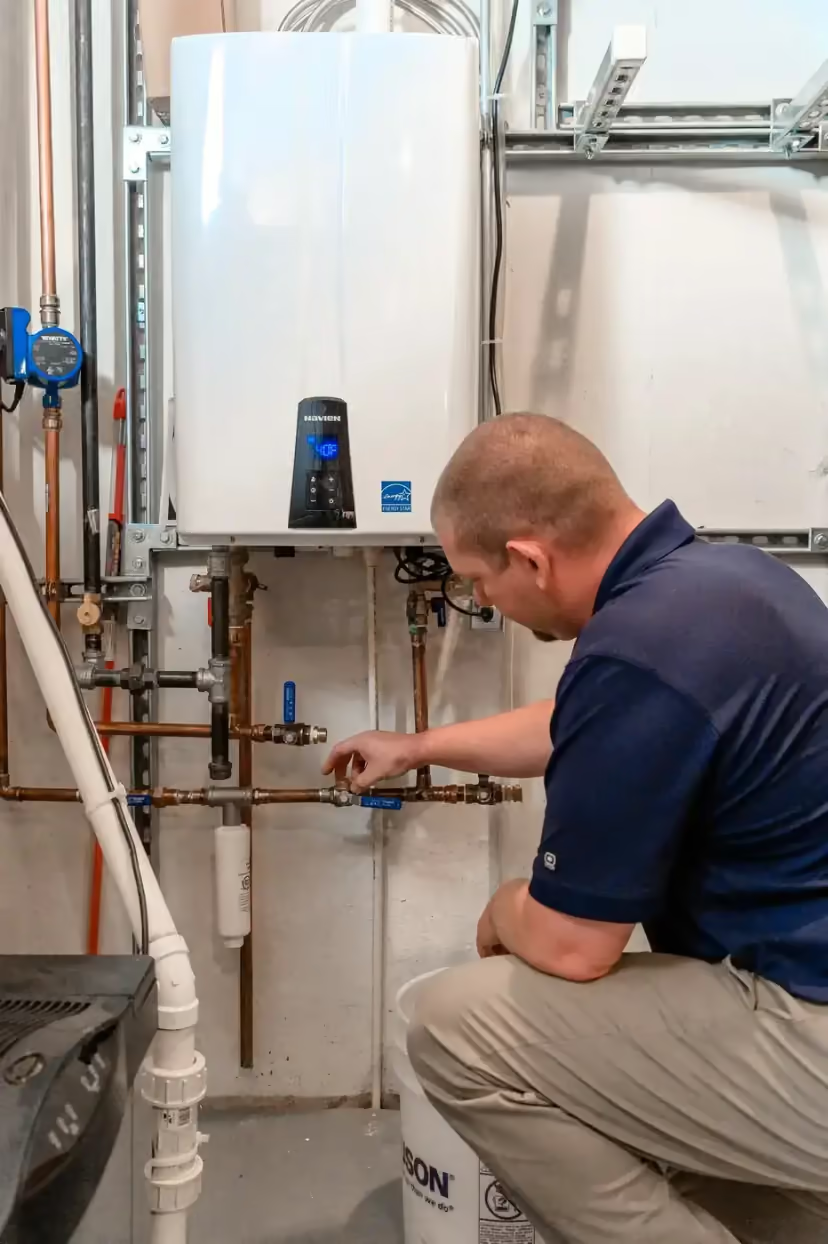
- Tankless units have their own maintenance steps in the owner's manual. Follow those.
Repair or replace? DOE says most storage water heaters last 10 to 15 years, and tankless water heaters can last more than 20. If a tank heater is in that age range and is leaking, rusting at the base or not keeping up, the New Year is a good time to plan a replacement rather than wait for it to fail. Our post on whether to repair or replace a water heater walks through the decision, and our water heater installation service covers tank and tankless units.
4. Run a simple leak test
EPA's WaterSense program estimates that household leaks can waste more than 9,300 gallons a year in the average home, and that nine percent of homes have leaks wasting 50 gallons or more a day. Two quick tests from EPA:
- The meter test. Check your water meter, then use no water for two hours and check it again. If the reading changed, you probably have a leak.
- The toilet test. Put a few drops of food coloring in the toilet tank. If color shows up in the bowl within 10 minutes, the toilet is leaking. Flush right after so the tank does not stain.
EPA also notes that toilet flappers wear out and should be checked periodically and replaced at least every five years. Our running toilet guide covers that fix, and our post on signs of a hidden water leak explains what to look for if the meter test fails. For a leak you cannot find, see our leak detection service.
5. Plan the year for your septic system
Many Santa Cruz County homes, especially in the mountains and rural areas such as Ben Lomond, Boulder Creek and Felton, are on septic. A New Year reset is a good time to check when the system was last inspected and plan ahead, using EPA's guidance rather than a fixed schedule:
- Inspection. EPA says a typical household septic system should be inspected by a septic service professional at least every three years. Systems with pumps, float switches or other mechanical parts should generally be inspected once a year.
- Emptying the tank. EPA says household tanks are typically pumped every three to five years, but the right timing depends on household size, wastewater, solids and tank size. The inspector measures the sludge and scum layers to decide.
- Records. Keep a record of each inspection, the sludge and scum levels and any repairs. If you cannot find your last report, that is a sign an inspection is due.
Wade's does not pump tanks. If an inspection shows the tank needs emptying, book a licensed pumping company.
In January the ground is often wet, so go easy on the system. EPA suggests spreading laundry across the week, fixing running toilets, and keeping roof drains and sump pump water away from the drainfield. Our seasonal septic maintenance guide has a season by season calendar, and our post on septic trouble signs explains what to watch for after storms.
6. Outdoors
- Hose bibs. The American Red Cross suggests disconnecting and draining outdoor hoses in cold weather and closing any inside valves that supply outdoor faucets. Freezing nights are more common in the mountains than near the coast. Our winter plumbing checklist and frozen pipe guide have more.
- Drainage. Walk the house after a storm and note where gutters and downspouts send water. Water pooling near the foundation or over the drainfield is worth redirecting.
Frequently asked questions
What plumbing checks belong in a New Year reset?
Find and test the main and fixture shutoffs, check washer hoses, look over the water heater and its temperature setting, run a meter and toilet leak test, and check when your septic system was last inspected if you have one.
How do I find my main water shutoff?
It is often outside the house or just inside the property line in line with the water meter. In some homes the supply is a tank in the garage, basement or a closet. Look for a round handle gate valve or a lever handle ball valve.
Should washer hoses be replaced on a schedule?
Many sources recommend every three to five years, and sooner if a hose bulges, frays, kinks or leaks. If you do not know how old yours are, replacing them and dating the new ones gives you a starting point.
What water heater checks are homeowner-safe?
Checking the temperature setting, looking for water or rust around the base and connections, keeping the area clear, and confirming the relief valve discharge pipe is in place. Draining sediment from a tank heater is also a homeowner task if you follow the manufacturer's directions.
How do I plan septic maintenance for the year?
Find your last inspection record. EPA recommends an inspection at least every three years for a typical system and generally once a year for systems with pumps or other mechanical parts. The inspector's sludge and scum measurements show when the tank needs emptying.
How is plumbing work priced?
Flat rate pricing, quoted on site before work begins.
Sources
- San Francisco Public Utilities Commission, Home Water Shutoff Valve
- Oatey (manufacturer), When Should I Change My Washing Machine Hose?
- U.S. Department of Energy, Energy Saver Guide
- U.S. EPA WaterSense, Fix a Leak Week
- U.S. EPA, How to Care for Your Septic System
- American Red Cross, Frozen Pipes