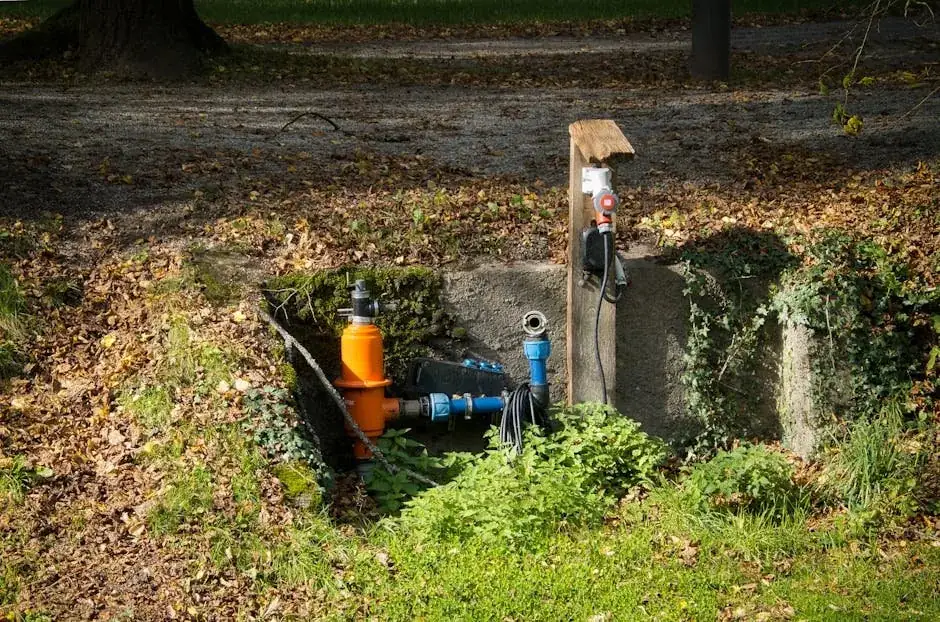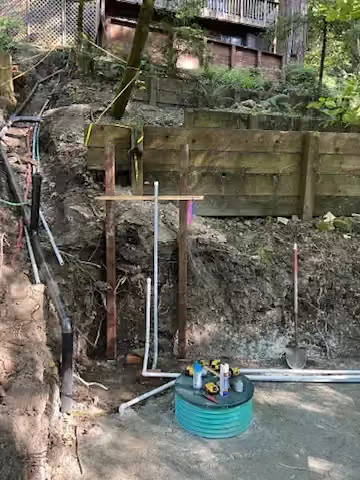
Connecting a Santa Cruz County house from septic to public sewer is two jobs: a sewer connection the sanitation agency permits, and a septic tank destruction Environmental Health permits. The tank has to be emptied, opened, and filled or removed so it cannot collapse or fill with water later. A county-permitted liquid waste hauler pumps the tank. Wade's Plumbing & Septic does not pump tanks. Wade's can install the building sewer and destroy the abandoned tank to the county procedure. Quotes are free.
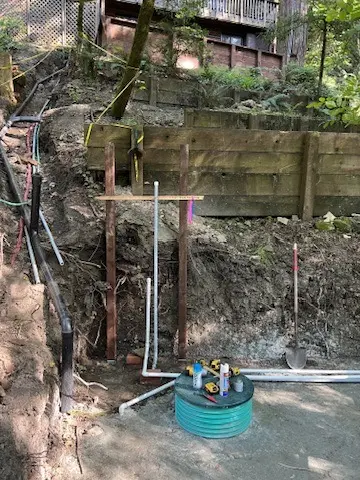
Quick answer
- Confirm sewer is actually available. The Santa Cruz County Sanitation District uses a Sewer Service Availability Form. Parcels outside urban service boundaries or the district sphere of influence can need extra steps.
- Get a Septic Tank Destruction Permit from County Environmental Health unless a new septic system is being installed under a separate repair or upgrade permit.
- A certified septage pumper empties the tank. Then the top is removed or crushed, each compartment gets a hole at least 12 inches in the bottom (unless the empty tank is filled with cement slurry), and the tank is filled or taken out.
- Environmental Health inspects before approving the permit and again during destruction. Call them at least 24 hours before work starts.
- The new lateral needs a sanitation inspection before the trench is backfilled. In the County Sanitation District, the owner is responsible for the lateral from the main to the building.
Confirm sewer before you open the yard
Santa Cruz County Public Works tells owners to contact the Sanitation Department first and submit a Sewer Service Availability Form. Additional work may be required before service is granted. Parcels outside Urban Service Boundaries or the County Sanitation sphere of influence can take more steps. Ask early. Do not assume a nearby main means your parcel can connect.
Chapter 7.38.042 of the County Code also prohibits a new OWTS when the property line is within 200 feet of a public sewer and connection is feasible (available by annexation or contract, and technically feasible). A connection ban or moratorium by itself does not make the connection infeasible. That rule is about new systems, not a requirement that every existing septic house hook up today. It is a reason to ask the district before you budget a septic replacement.
City of Santa Cruz, Watsonville, and other sewer agencies have their own connection rules. This post follows County Environmental Health and County Sanitation District pages. If you are inside a city, start with that city's sanitation or public works office.
Homes in Live Oak, Santa Cruz, and Capitola sit closer to public sewer than mountain parcels. Availability is still parcel-specific.
Two permits, two inspections
County Environmental Health requires a Septic Tank Destruction Permit whenever a tank will be destroyed or will no longer be used. The only exception is when another septic system is being installed under a separate Repair or Upgrade Sewage Disposal Permit. A qualified professional typically submits the destruction application.
Santa Cruz County Public Works, for County Sanitation District connections, also requires:
- A plumbing fixture count and a rough schematic of the proposed sewer connection
- Sewer connection fees (based on installed drainage fixture units in California Plumbing Code section 702.1), plus district buy-in and annexation fees when they apply, paid before the sewer connection permit is issued
- Inspection of the lateral construction and connection by a sanitation inspector before the trench is backfilled
The district publishes a no-cost sanitary sewer lateral permit for work in its service areas. The Sewer Lateral Resources page lists where to pick up that permit and how to schedule the sanitation inspection. Work in a county right-of-way needs pre-clearance: traffic control plans, insurance, licensing, and public notice as required. That work must be done by a licensed contractor or plumber.
Do not treat those district charges as a quote for Wade's work. Ask the district for current connection fees. Wade's prices installation and tank destruction as a flat rate, quoted on site before work begins.
Why an unused tank cannot stay as-is
Environmental Health's destruction page is blunt. An improperly destroyed tank can collapse under people, pets, vehicles, or a future foundation. A tank left in the ground can fill with water and become an entrapment or drowning hazard. Filling or removing it is a safety step, not optional yard work.
The county's Septic Tank Destruction Procedure (PDF) is the method:
- Apply with a completed application, fees, and two scaled plot plans showing the tank location.
- Completely pump out all sewage from the tank, cesspool, or seepage pit by a Certified Septage Pumper.
- Remove or crush the top cover.
- Punch a hole at least 12 inches in diameter in the bottom of each compartment.
- Fill with sand, gravel, concrete, self-compacting soils, or another material the district inspector approves. Earth or sand has to be jetted and compacted so it does not settle later.
- Breaking the bottom is not required if the empty tank is filled with cement slurry. If the tank is less than 5 feet from any existing or proposed structure, cement slurry must be used.
- If the tank is removed instead, backfill the hole with clean self-compacting soil, sand, or pea gravel.
Environmental Health staff visit the site before approving the permit and again for the actual destruction. Contact them 24 hours before work starts. Coordinate with Public Works if you are connecting to sewer at the same time.
Wade's does not pump tanks. The pump-out in step 2 is done by a hauler on the county's permitted liquid waste hauler list. After the tank is empty, Wade's can complete the destruction and the building-sewer work under septic system abandonment.
The new lateral
Once the house drains to the public main, you own the lateral from that main to the building, in the County Sanitation District. The district's Sewer Lateral Resources page says the owner is responsible for cleaning, repairs, backflow devices, and inspection. Video inspections are required at sale, for additions or remodels that increase fixture units, for ADU connections, for new buildings, and when there are more than two overflows in 12 months.
A sewer camera inspection records the line so the district (or the next buyer) can see roots, offsets, and sags before the trench is closed or the house is sold. If the old septic building drain is reused as part of the new lateral, that camera pass is how you find out whether the pipe is worth keeping.
Frequently asked questions
Do I need a permit to abandon a septic tank in Santa Cruz County?
Yes. County Environmental Health requires a Septic Tank Destruction Permit whenever a tank will be destroyed or no longer used, unless another septic system is being installed under a separate repair or upgrade permit.
Who pumps the tank?
A Certified Septage Pumper (a county-permitted liquid waste hauler) pumps out all sewage before the tank is crushed, filled, or removed. Wade's Plumbing & Septic does not pump tanks.
Can I leave the empty tank in the ground and just cap it?
Not as a finished abandonment. The county procedure requires the top to be removed or crushed, the bottom opened (unless cement slurry is used), and the tank filled or taken out so it cannot collapse or fill with water.
How is septic tank destruction priced?
Flat rate, quoted on site before work begins. Quotes are free. Sewer connection, buy-in, and annexation fees are charged by the sanitation agency, not by Wade's.
Sources
- Santa Cruz County Environmental Health, Septic Tank Destruction
- Santa Cruz County Environmental Health, Septic Tank Destruction Procedure (PDF)
- Santa Cruz County Public Works, Sewer Lateral Resources
- Santa Cruz County Code, Chapter 7.38 Sewage Disposal
Request a free quote
Wade's Plumbing & Septic provides septic system abandonment and sewer camera inspection for homes in Live Oak, Santa Cruz, Capitola, and the rest of Santa Cruz County and nearby Santa Clara County communities. Quotes are free and pricing is flat rate, quoted on site before work begins. Get a Free Quote or call during office hours, Monday to Friday, 9:00 AM to 5:00 PM.