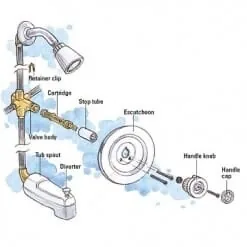
Quick answer: A shower valve, hidden behind the handle, mixes hot and cold water. When it wears out, you get sudden hot or cold bursts when someone flushes, a handle that barely changes the temperature, or drips from the showerhead. Often a new cartridge fixes it; an old valve without scald protection is usually worth replacing. Building departments note that the California Plumbing Code calls for an ASSE 1016 temperature limiting valve on showers and tub showers, with a 120°F maximum.
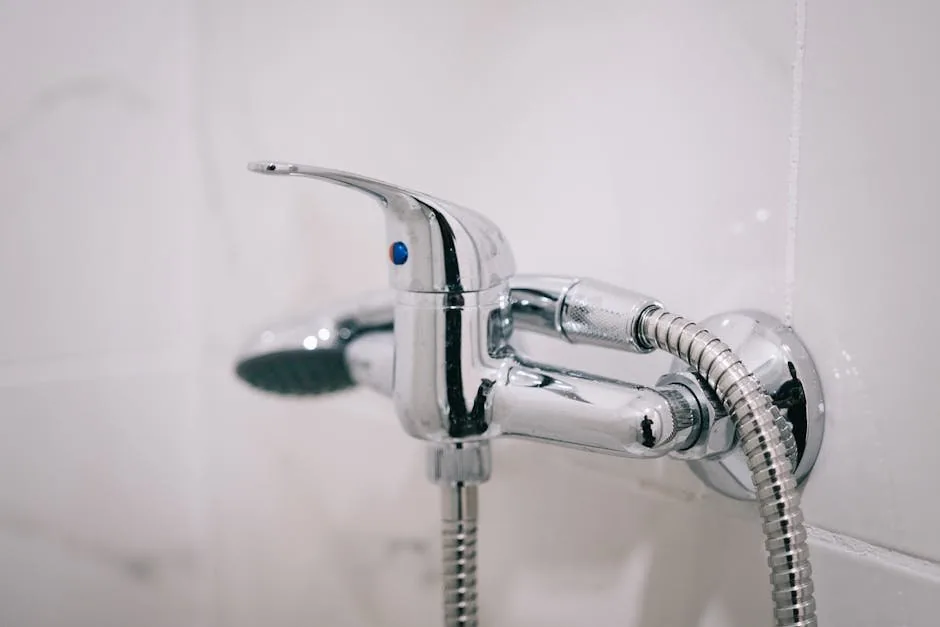
We recently replaced a shower valve for a Santa Cruz homeowner whose shower swung between hot and cold and lost pressure whenever water was used elsewhere in the house. A new pressure balancing valve fixed it. Here is how to tell whether yours has the same problem.
What a shower valve does
The valve body sits in the wall behind the handle. Inside it, a cartridge (or older stems and washers) controls how much hot and cold water mixes. Modern valves also compensate when pressure changes on one side, so a flushing toilet does not turn the shower suddenly hot or cold.
Signs the valve needs attention
- Temperature swings when a toilet flushes or the dishwasher runs.
- The handle barely changes the temperature, or you cannot get hot water at all.
- The showerhead or tub spout keeps dripping after you turn the handle off.
- The diverter will not switch fully between tub and shower.
- Stains, soft drywall or mildew on the other side of the shower wall, which can mean a leak at the valve.
Repair or replace?
- Replace the cartridge when the valve body is sound and parts are available. This is often the simpler fix for drips and stiff handles.
- Replace the valve when parts are no longer made, the body is corroded or leaking inside the wall, or the valve has no pressure balancing or thermostatic protection. Replacing the body usually means opening the wall behind the shower or working through an access panel.
Valve types
- Pressure balancing valve. Senses pressure changes on the hot and cold sides and adjusts the mix, so temperature stays steady when water is used elsewhere. The most common type in homes.
- Thermostatic valve. Controls the actual water temperature, not just the ratio, and often allows separate control of volume and temperature.
- Diverter or transfer valve. Sends water to the showerhead, tub spout or a hand shower. Often used with one of the above.
As the Town of Truckee building department explains, the California Plumbing Code requires showers and tub shower combinations to use an ASSE 1016 valve, which it describes as pressure balancing, thermostatic mixing and temperature limiting, with a maximum delivered water temperature of 120°F, and the water heater thermostat cannot serve that role.
Why scald protection matters
The U.S. Consumer Product Safety Commission notes that most tap water scald injuries and deaths happen to older adults and children under five. Water at 140°F can cause a third degree burn in six seconds, and CPSC urges households to set water heaters to 120°F. A valve with temperature limiting adds a second layer of protection at the shower itself.
Frequently asked questions
Why does my shower get hot when someone flushes?
The toilet draws cold water, which drops the cold side pressure. A valve without pressure balancing cannot compensate, so the mix turns hot. A pressure balancing or thermostatic valve fixes it.
Can I just replace the cartridge?
Often, yes, if the valve body is in good shape and the cartridge is still made. If the valve is old, leaking inside the wall or lacks scald protection, replacing the valve is the better fix.
Does low shower pressure always mean a bad valve?
No. A clogged showerhead from mineral buildup is a common cause. Our hard water guide covers scale. If every fixture is weak, the problem is upstream of the shower.
Sources
- U.S. Consumer Product Safety Commission, Tap Water Scalds
- Town of Truckee Building Division, Water Temperature Limiting Devices
Need help with a shower valve?
Wade's Plumbing & Septic provides shower installation and repair across Santa Cruz County and nearby Santa Clara County communities. Quotes are free and pricing is flat rate, quoted on site before work begins. Request service or call during office hours, Monday to Friday, 9:00 AM to 5:00 PM.