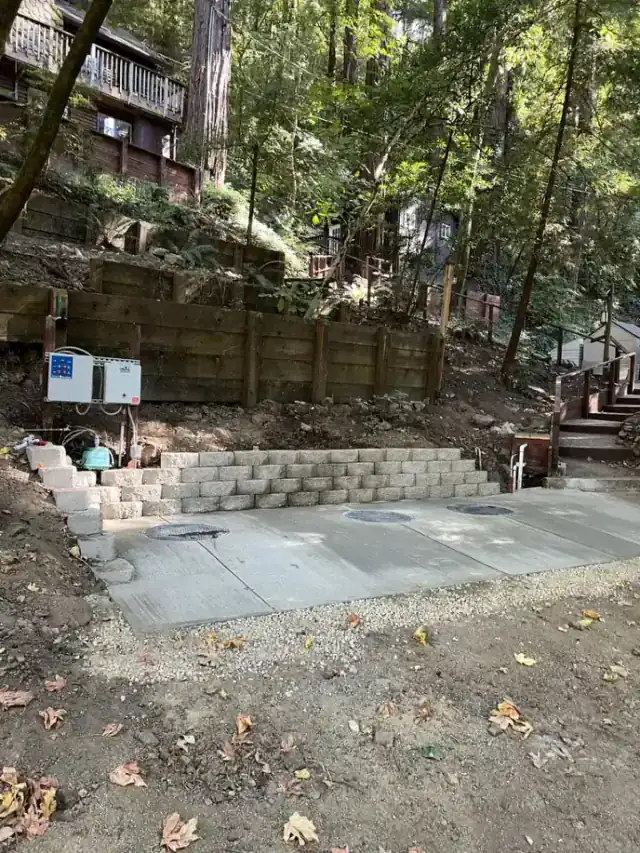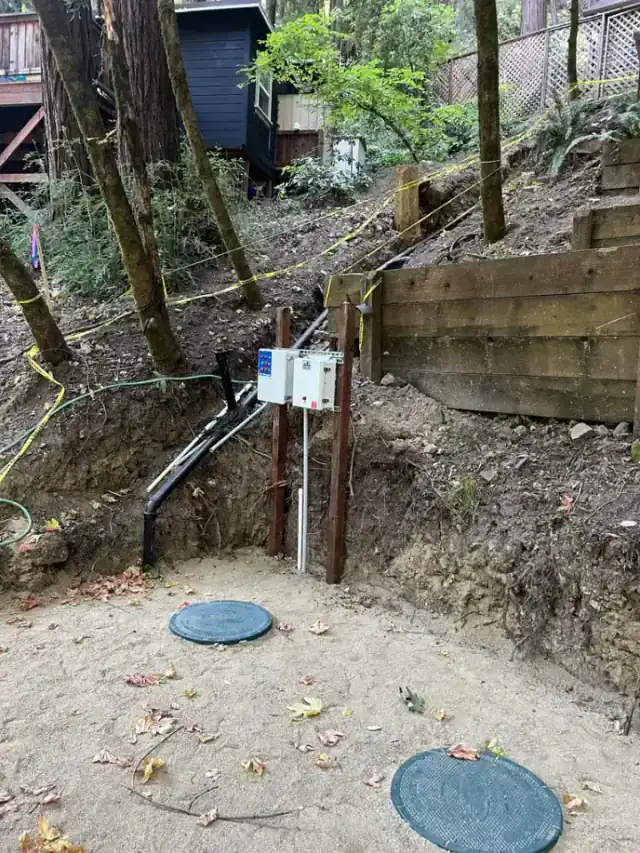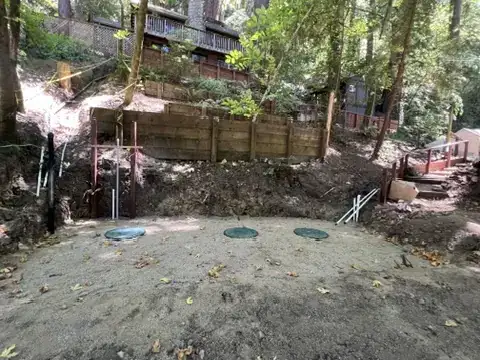
If you are selling a Santa Cruz County home on a septic system, County Environmental Health requires a point-of-sale inspection before the transfer. The seller has the system inspected, has the tank emptied by a registered liquid waste hauler, and gives the buyer a standard disclosure. Failures have to be repaired, or the buyer can take that responsibility in writing. Wade's Plumbing & Septic inspects systems, helps with permits, and installs repairs or replacements alongside the project's engineer. Wade's does not empty tanks.
Quick answer
- The rule took effect July 1, 2023. It applies to properties in Santa Cruz County served by an onsite wastewater treatment system (OWTS), which is the county's term for a septic system.
- County Code section 7.38.216 says the seller must cause the system to be pumped and inspected by a qualified professional, using the county's transfer inspection form.
- Only a registered liquid waste hauler may empty the tank. Environmental Health keeps a list of permitted haulers. Some haulers also complete sale inspections. Wade's does not empty tanks.
- The pumping report has to be from the 12 months before close of escrow and include a leach field flow test of at least 250 gallons measured with a flow meter.
- If the system is failing, the seller repairs it before sale, or buyer and seller file a Transfer of Responsibility form with Environmental Health. The buyer then applies for a repair permit within 30 days of close and finishes the work within 90 days.
What the county actually requires
The Board of Supervisors approved the septic ordinance changes in October 2022 to protect buyers and to match the county's Local Agency Management Program (LAMP) for onsite wastewater systems. County Environmental Health's Rural Real Estate Sales page is the homeowner version of those rules.
Before close of escrow, the seller is responsible for:
- A point-of-sale septic inspection that identifies defects and describes the system.
- A disclosure, completed by seller and buyer, that describes possible OWTS concerns.
- Submitting the inspection report and disclosure to Environmental Health, using the contact listed on the Rural Real Estate Sales page.
- Completing needed repairs, unless the buyer agrees in writing to take them on.
The inspection form is supposed to cover system characteristics, permits, service agreements, performance history, and an assessment of the system and the site. It should say whether the system was installed under an approved permit, whether it meets current standards, or that those facts cannot be determined.
That last box matters in the San Lorenzo Valley. Many older systems in Ben Lomond, Boulder Creek and Felton were built to earlier rules. A passing pumping report is not the same thing as a finding that the system would be approved today. See new septic installations in Santa Cruz County for how a replacement is designed and permitted.
Who does the pumping, and who does the rest
County maintenance rules say a septic tank may be emptied only by a registered liquid waste hauler in good standing with the county. Haulers are regulated under County Code Chapter 7.42. Environmental Health publishes the permitted company list and marks which companies also do sale inspections.
Hire the hauler for the emptying and the pumping inspection report. If that report shows a failure, a structural defect, or questions you want answered before you list the house, a plumber or septic installer can inspect the tank, lines, pump, and drainfield, then quote repair or replacement. Wade's provides septic inspection and assessment, certification support, compliance and permitting help, and repair or replacement installed to the engineer's design. Quotes are free. Wade's does not empty tanks.
The county also recommends a deeper, optional Point of Sale OWTS Evaluation Report from an approved provider. That report is meant to look beyond the day of the pumping: site constraints, whether a future remodel would trigger an upgrade, and how the system compares with current standards. The pumping report, the county says, only describes conditions at the time of the emptying. It does not prove past wet-season performance or future capacity.
The 250 gallon flow test and what a "problem" looks like
A recent emptying is not enough by itself. The report has to include a flow test of the leach field using at least 250 gallons, measured with a flow meter, and it has to be from the 12 months before close.
The county treats a high operational level in the tank, or liquid flowing back into the tank, as a sign the system may not be working well. No automatic repair is required for those findings, but more investigation is recommended. They can mean a clogged or crushed line, or a failure that is close. Our septic trouble signs post covers what homeowners notice before a sale report does.
A system cannot receive a passing evaluation if a structure or other obstruction blocks access so the tank cannot be fully inspected, emptied, and flow tested. Building over the tank or other OWTS components also violates setbacks. Clearing that obstruction, or filing a Transfer of Responsibility so the buyer pulls a corrective permit, is how escrow gets unstuck.
If the report finds a failure
Failures and structural defects have to be corrected under an Environmental Health permit. The county's preference is that the seller finishes the work before close. If the buyer agrees to take it on:
- Both parties sign the Seller Transfer of Responsibility to Buyer for Septic Repair form.
- The form has to be submitted to Environmental Health before the sale and included in the transfer documents. The seller stays responsible until that form is submitted and approved.
- The buyer applies for the repair permit no later than 30 calendar days after close of escrow and completes the repair within 90 days of close.
The Health Officer can allow more time if the owner is pursuing the repair with due diligence and circumstances beyond their control will prevent finishing in 90 days. Interim measures still have to prevent a public health or water quality impact.
Minor maintenance is a different category. Repair or replacement of tank lids, risers, tees, ells, sewer tightlines, pumps, valves, or electrical components does not need a permit. The county still wants those items handled at transfer by the seller or the buyer. No Transfer of Responsibility form is required for that class of work.
A third party or escrow can pay. Payment does not move legal responsibility. Only the approved transfer form does that.
Exemptions
The Rural Real Estate Sales FAQ lists these exemptions:
- Properties on public sewer
- Undeveloped parcels
- A new OWTS installed under permit within the last 5 years
- An OWTS repaired or upgraded under permit within the last 3 years
- Transfers without consideration, or transfers between existing co-owners (including gifts between family members, joint-tenancy transfers at death, probate, and trust distributions)
If you think you qualify, confirm with Environmental Health rather than skipping the paperwork.
Enhanced treatment systems
If the property has an enhanced treatment system, extra steps apply. County Code requires the seller to disclose any active annual service agreement, the current service provider, and the related county and provider fees. New owners have to show that the service policy transferred, or that they signed a new policy with an approved Onsite System Service Provider (OSSP).
The Rural Real Estate FAQ adds: the buyer must receive an OSSP inspection report from the 6 months before close, and the new owner must enter a service agreement with an approved OSSP at sale. The OSSP decides whether the tank needs emptying. If it does, the 250 gallon flow test is required at that time. If the OSSP decides emptying is not needed, the flow test may be waived.
Enhanced systems are common on steep, sandy, or high-groundwater lots. Our engineered septic system guide explains why those designs show up here.
What buyers should still do
The county tells buyers not to treat the pumping inspection as the whole story. Look up the parcel in Environmental Health's public files. Those records show what was permitted: structures, bedrooms, and square footage. They also show whether the system is unpermitted.
If the system is unpermitted but the pumping inspection shows it is working, the county does not require more work at sale. The buyer should still know that records may be thin, and that a future remodel will require a qualified professional to show the system meets standards, or an upgrade under permit. Unpermitted additions raise the same issue: the system may be undersized even if it is not failing today. OWTS repair and upgrade is the county page that explains when repair standards versus upgrade standards apply, including accessory dwelling units.
If the home is on a private well, spring, or other individual water system, a separate time-of-sale water quality and yield test applies as of September 1, 2025. That is County Code section 7.73.075, described on the same Rural Real Estate Sales page. It is not a septic inspection, but rural sales often need both.
Frequently asked questions
Do I need a septic inspection to sell a house in Santa Cruz County?
Yes, if the property is served by a septic system and none of the county's exemptions apply. The requirement began July 1, 2023.
Does Wade's empty the tank for the sale inspection?
No. County rules say only a registered liquid waste hauler may empty a septic tank. Wade's inspects, repairs, and installs systems with engineers. We do not empty tanks.
How recent does the pumping report have to be?
Within 12 months before close of escrow, and it must include a leach field flow test of at least 250 gallons measured with a flow meter.
What if the inspection finds a failing system?
The seller repairs it under an Environmental Health permit before sale, or buyer and seller file a Transfer of Responsibility form. The buyer then applies for the repair permit within 30 days of close and finishes the work within 90 days.
How is septic repair or replacement priced?
Flat rate, quoted on site before work begins. Quotes are free.
Sources
- Santa Cruz County Environmental Health, Rural Real Estate Sales
- Santa Cruz County Code, Chapter 7.38 Sewage Disposal Ordinance, section 7.38.216 (LAMP Appendix A, adopted October 25, 2022)
- County of Santa Cruz, Board Approves Septic Ordinance Changes (press release, October 26, 2022)
- Santa Cruz County Environmental Health, Seller Transfer of Responsibility to Buyer for Septic Repair
- Santa Cruz County Environmental Health, Liquid Waste Pumping Companies Operating in Santa Cruz County Under Permit (PDF, revised April 23, 2026)
- Santa Cruz County Environmental Health, Maintenance of an OWTS
- Santa Cruz County Environmental Health, OWTS Repair and Upgrades
- Santa Cruz County Environmental Health, Local Agency Management Program
Request a free quote
Wade's Plumbing & Septic provides septic inspection, certification support and septic repair or replacement for homes in Ben Lomond, Boulder Creek and the rest of Santa Cruz County and nearby Santa Clara County communities. Quotes are free and pricing is flat rate, quoted on site before work begins. Get a Free Quote or call during office hours, Monday to Friday, 9:00 AM to 5:00 PM.